Structural Drying and Dehumidification in Pasadena
Pulling the water out is only half the job. Pasadena crews set air movers and dehumidifiers, measure walls, floors and framing every day, and keep going until each material reaches its dry standard.
(888) 578-6508Request drying equipment help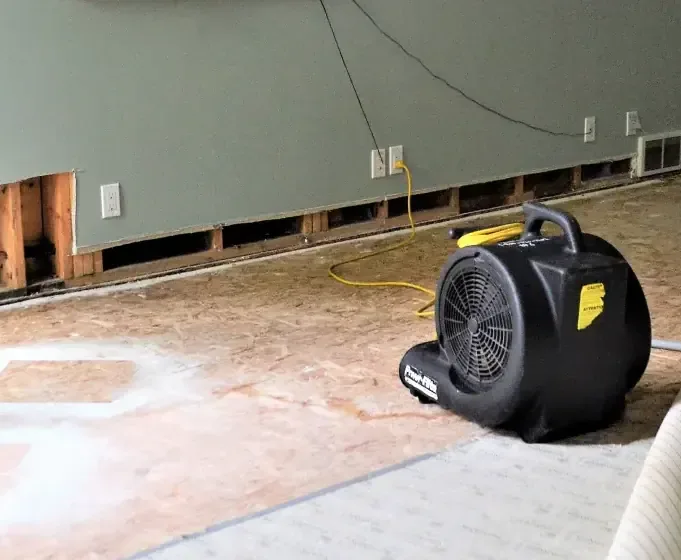
First steps for structural drying and dehumidification
Stop the water
Fix or shut off the source so the walls can begin to dry.
Lift loose items
Move rugs, boxes and small furniture off wet floors so surfaces can be measured.
Photograph it
Take pictures of wet walls, floors and belongings before drying begins.
Bring in equipment
Have air movers and dehumidifiers placed from the readings, not by guesswork.
How structural drying and dehumidification is handled
Water that is no longer visible can still be inside the drywall, the framing and the subfloor. Structural drying removes that hidden moisture with measured equipment, so the building is dry and not just dry to the touch.
Rapid local response
Active water is treated as urgent at any hour, so the extraction crew starts while the water is still on the surface.
IICRC S500 drying standard
Moisture mapping comes first, then extraction, air movers and LGR dehumidifiers sized to the class of loss.
Claim-ready documentation
The mitigation team keeps a moisture map, daily psychrometric logs and timestamped photos for the adjuster.
Valley water know-how
Slab floors, copper under concrete, hard water and storm runoff with nowhere to drain shape each drying plan.
What does structural drying and dehumidification cost in Pasadena, CA?
Structural drying in Pasadena commonly runs $1,500 to $3,000 for one or two rooms, $3,000 to $5,500 for several rooms or a subfloor, and $5,500 to $8,000 or more for dense materials such as hardwood or concrete.
One or two rooms
$1,500 to $3,000- Air movers and dehumidifier
- Daily moisture readings
- Three to four days
Several rooms or subfloor
$3,000 to $5,500- LGR dehumidifiers and cavity drying
- Subfloor or slab drying
- Four to six days
Dense materials
$5,500 to $8,000+- Desiccant dehumidification
- Hardwood, plaster or concrete
- Extended monitoring
Ranges are typical, not a quote: the water category, square footage, material class and how fast drying started move the number most. The water damage cost calculator gives a closer planning range.
Structural Drying and Dehumidification, step by step
- 1
Map the moisture
Meters and a thermal camera mark every wet surface and set the starting numbers.
- 2
Place the equipment
Air movers and dehumidifiers are sized and positioned to the wet area and its materials.
- 3
Read daily
Readings repeat each day, and equipment is shifted or added as the numbers change.
- 4
Release and report
Equipment comes out when every material meets its standard, and the logs go to the owner.
How drying equipment works
Air movers push dry air across wet surfaces and lift moisture into the room. LGR dehumidifiers pull that moisture out of the air so it cannot settle back into the walls, and the whole space is kept closed while the equipment runs.
Measuring until it is dry
Moisture meters and a thermal camera map the wet areas on day one, and readings are repeated every day. Equipment is moved, added or removed based on the numbers, and drying ends when each material matches its dry standard, not after a set number of days. Daily logs of temperature, humidity and moisture readings show the loss drying down to a clear end point. Together with photos, they give an adjuster the evidence behind the final invoice.
Walls, floors and cavities
Wall cavities dry through small openings, drilled holes or removed baseboard, and wood or laminate floors may need special mats to pull water from the subfloor. Insulation that stays wet is taken out, because it holds moisture against the framing. Hardwood, plaster and concrete hold water far longer than drywall, so they are often dried with desiccant equipment and watched for more days. The extended monitoring avoids moving on before the deepest layer has let go.
After pipes, storms and sewage
Drying follows nearly every kind of water loss, from a split pipe in an older house to storm runoff in a garage, and it starts once the water has been removed. See water extraction for that first stage and storm flood cleanup for contaminated losses.
Structural drying and dehumidification coverage and nearby areas
Structural drying serves houses, apartments and commercial spaces across the city, from Bungalow Heaven and Hastings Ranch to Old Pasadena and the South Lake Avenue Business District, wherever water has soaked walls or floors.
The same service nearby: structural drying and dehumidification in Sun Valley, San Marino, South Pasadena.
Structural Drying and Dehumidification: common questions
How long does structural drying take?
Most losses take three to six days, and dense materials take longer. The readings decide, not a calendar, so equipment stays until every material reaches its dry standard.
Why is the equipment so loud and hot?
Dehumidifiers and air movers run all day to pull moisture out of the air, and they give off heat. It is normal, and it is a sign the drying is working.
Can box fans and a household dehumidifier do the job?
They help with surface moisture, but they rarely reach water inside walls, subfloors and framing. Commercial equipment and meter readings are what confirm the structure is truly dry.
Do walls always have to be opened?
No. Small drilled holes or removed baseboard often let air reach the cavity. Walls are opened only when readings show insulation or drywall that cannot dry in place.
Is drying needed after extraction?
Yes. Extraction removes the loose water, but drywall, wood and subfloor keep moisture that only drying equipment and time can remove. See water extraction for the first stage.
Does hardwood need special drying?
Often. Wood floors cup if moisture leaves too fast or too slowly, so mats or desiccant equipment are used and readings are watched closely until the boards settle.
Dry the structure, not just the surface
Structural drying crews work across Pasadena, setting equipment by the readings and logging each day until dry.