Slab Leak Water Damage in Sun Valley, CA
A pressure leak under a slab soaks the floor from below. The restoration team maps the wet area, lifts the flooring that traps the water and dries the concrete and wall bottoms with daily readings.
(888) 578-6508Warm spot or wet floor? Call about the slab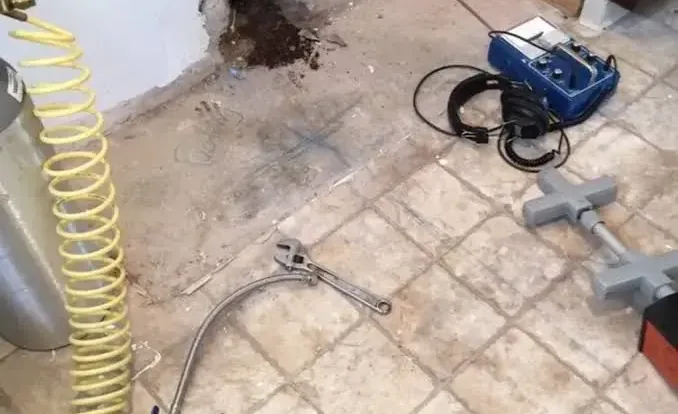
First steps for slab leak water damage
Shut off the main
If the meter keeps turning with everything off, close the house shutoff to stop the leak.
Mark the warm spots
Put tape on warm or damp spots on the floor; it helps the leak locator later.
Pull back wet rugs
Lift rugs and furniture off damp areas so the floor can breathe.
Photograph the floor
Take photos of lifting tile, swollen baseboards and damp carpet for the claim.
How slab leak water damage is handled
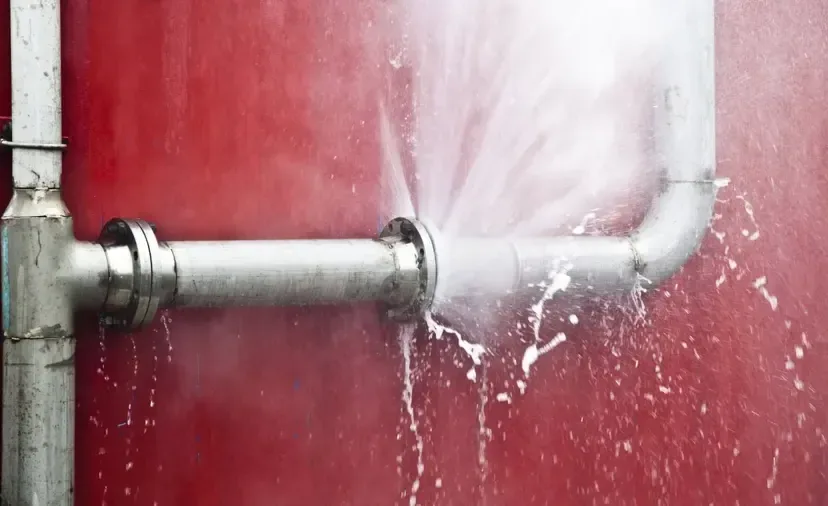
Many houses in the area were built after the Second World War on concrete slabs, with copper supply pipe laid in or under the pour. Decades of hard water, and pipe rubbing against concrete or gravel, can wear a pinhole through the copper. Because the pipe is under pressure, a slab leak runs around the clock until the water is shut off.
Rapid local response
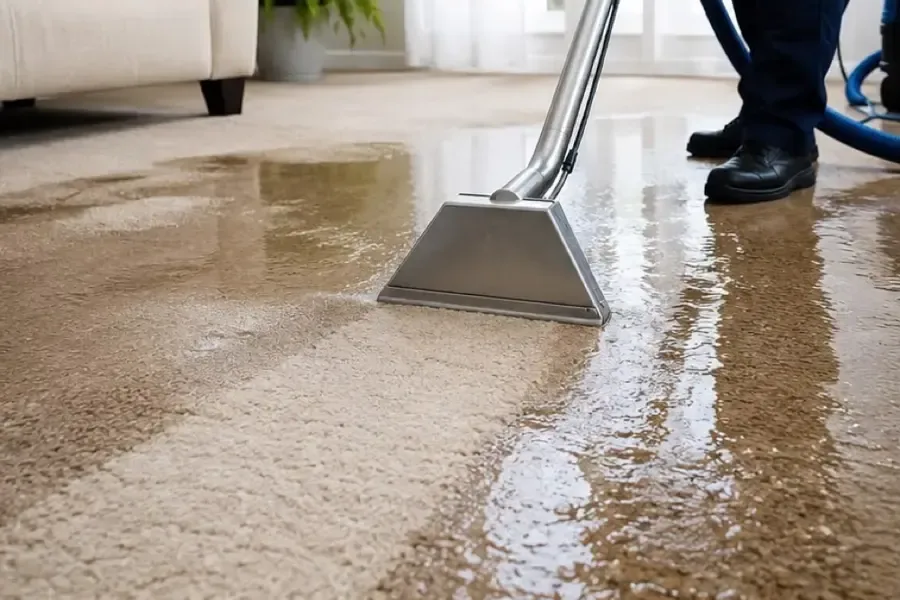
Active water is treated as urgent at any hour, so the extraction crew starts while the water is still on the surface.
IICRC S500 drying standard
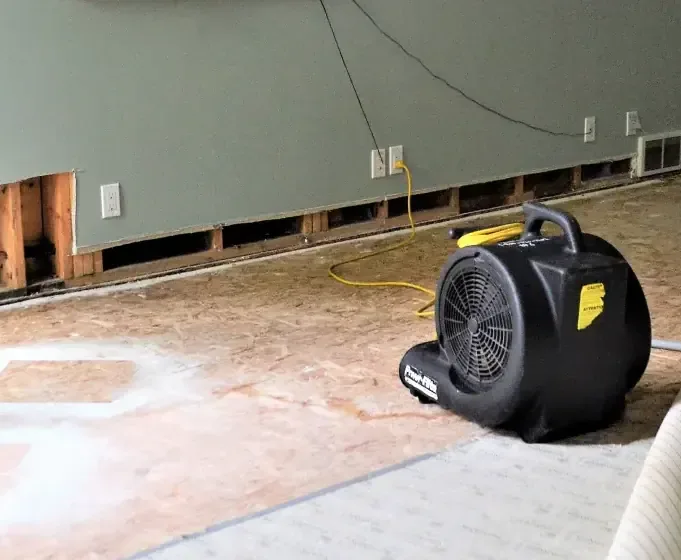
Moisture mapping comes first, then extraction, air movers and LGR dehumidifiers sized to the class of loss.
Claim-ready documentation
The mitigation team keeps a moisture map, daily psychrometric logs and timestamped photos for the adjuster.
Valley water know-how
Slab floors, copper under concrete, hard water and storm runoff with nowhere to drain shape each drying plan.
What does slab leak water damage cost in Sun Valley, CA?
Slab leak water damage drying here usually runs $1,800 to $8,000, separate from the plumber's leak repair. The cost depends on how far the water spread under the flooring, which flooring has to come up, the square footage and how long the leak ran.
Small area near the leak
$1,800 to $3,500- One room or a hallway
- Flooring lifted over the wet area
- Air movers and a dehumidifier on the slab
Several rooms
$3,500 to $6,000- Water spread under carpet or laminate
- Baseboard and lower drywall removal
- Daily slab and wall readings
Long-running leak
$6,000 to $8,000+- Most of a floor affected
- Wide flooring removal
- Extended structural drying
Ranges are typical, not a quote: the water category, square footage, material class and how fast drying started move the number most. The water damage cost calculator gives a closer planning range.
Slab Leak Water Damage, step by step
- 1
Moisture map
Thermal imaging and meters show how far the water spread across the slab and up the walls.
- 2
Coordinate the repair
The plumber or leak locator opens and repairs the pipe; the team works around the access point.
- 3
Open the trapping layers
Pad, laminate or vinyl over the wet area comes up so the concrete can release water.
- 4
Dry and verify
Dehumidifiers and air movers run on the slab until it matches a dry reference reading.
Signs a leak is under the slab
A slab leak rarely starts as a puddle in the middle of a room. The usual signs are quieter:
- A warm spot on tile or concrete, from a leak on the hot side
- The sound of running water with every fixture off
- A water meter that keeps turning when nothing is on
- Damp carpet, lifting tile or swelling baseboards away from any sink or tub
- A water bill that jumps for no clear reason
Who fixes the pipe and who dries the house
A leak locator or plumber finds and repairs the pipe, by a spot repair through the slab, an epoxy liner or a reroute through the walls or attic. The restoration team handles the water damage around that repair: it maps how far the water spread, removes the flooring that traps moisture against the concrete and dries the slab, the bottom plates and the drywall. The EPA's WaterSense program explains how to use the meter to check for hidden leaks.
Why slabs take longer to dry
Concrete holds water deep in the pour and lets it go slowly. Carpet pad, laminate and vinyl plank laid over a wet slab trap that moisture, so the drying team usually pulls back the flooring over the wet area and runs dehumidifiers and air movers right on the concrete. Readings are compared with a dry part of the same slab, and equipment stays until the wet area matches. Fast drying limits mold growth, as the EPA's mold and moisture pages explain.
Slab leaks and the insurance claim
Many policies treat the sudden water damage from a slab leak differently from the pipe repair itself, and some cap the cost of opening the slab. The claim file built during drying, with photos, a moisture map and daily readings, shows what got wet and when. Coverage depends on your policy, so check with your own insurer.
Slab leak water damage coverage and nearby areas
Coverage runs across ZIP 91352 and 91353, from the river-rock homes of Stonehurst and the streets off Sheldon and Tuxford to the yards along San Fernando Road and the hillside lots toward La Tuna Canyon.
Nearby coverage reaches Burbank, North Hollywood, Pacoima, Arleta, Panorama City, Shadow Hills, Sunland, Tujunga and Lake View Terrace.
Related water damage services
Slab Leak Water Damage: common questions
What causes slab leaks in older Valley homes?
Most come from copper supply pipe under the slab wearing thin. Hard water, pipe movement against concrete or gravel and age all play a part, and hot-water pipe tends to fail first.
Can a slab leak be fixed without breaking the floor?
Often, yes. Plumbers can reroute the pipe through the walls or attic or line it with epoxy, while a spot repair needs a small opening in the slab. The water damage around the leak still has to be dried either way.
How long does a wet slab take to dry?
A small wet area often dries in three to five days once the flooring over it is lifted. Larger or long-running leaks can take a week or more, depending on the readings.
Does all the flooring have to come up?
No. The drying team lifts flooring only where readings show water trapped under it. Tile set directly on the slab sometimes stays in place while the edges and grout joints dry.
Is slab leak damage covered by insurance?
Many policies cover sudden water damage from a slab leak but treat the pipe repair and slab access differently. Coverage depends on your policy, so check with your own insurer.
Why does a slab leak make the floor warm?
When the leak is on the hot-water side, heated water spreads under the concrete and warms the floor above it. A warm patch on tile is one of the clearest signs.
Water coming up through the floor? Call now.
The restoration team maps the wet slab, lifts what traps the water and dries the concrete to a verified reading.