Burst and Pinhole Pipe Leaks in Sun Valley, CA
When a supply pipe splits or pinholes inside a wall, water fills the cavity before it shows. The extraction crew clears the floor, and the drying team opens and dries only the sections that read wet.
(888) 578-6508Pipe burst? Get the water out now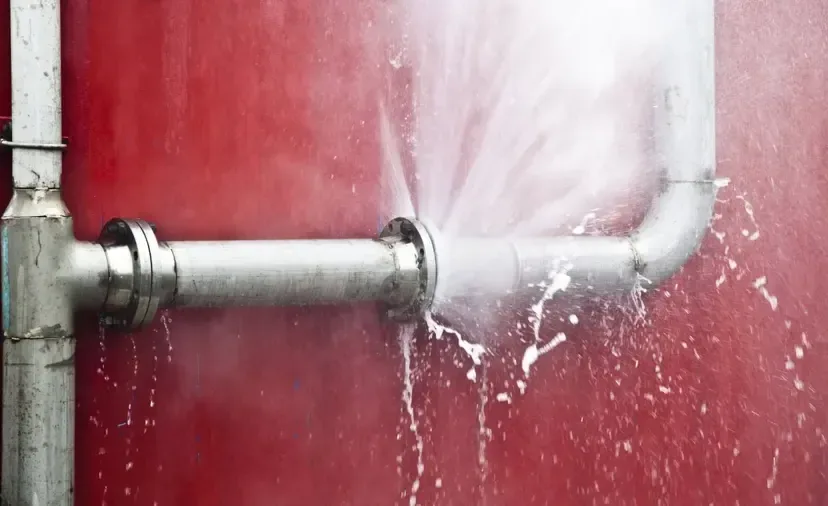
First steps for burst and pinhole pipe leaks
Close the valve
Shut the fixture valve or the main so the pipe stops pushing water.
Drain the pipes
Open a faucet at the lowest point of the house to let the remaining water out.
Keep clear of wet ceilings
Stay out from under a sagging ceiling; it can drop without warning.
Photograph the failure
Photograph the failed pipe and every wet room before anything is removed.
How burst and pinhole pipe leaks is handled
Homes built before the 1960s often still carry galvanized steel supply pipe, which rusts from the inside until it narrows and splits at a joint. Copper lasts longer but can pinhole, especially where hard water and fast flow wear the pipe wall thin. Either way, a pressurized pipe inside a wall keeps leaking until the valve is closed.
Rapid local response
Active water is treated as urgent at any hour, so the extraction crew starts while the water is still on the surface.
IICRC S500 drying standard
Moisture mapping comes first, then extraction, air movers and LGR dehumidifiers sized to the class of loss.
Claim-ready documentation
The mitigation team keeps a moisture map, daily psychrometric logs and timestamped photos for the adjuster.
Valley water know-how
Slab floors, copper under concrete, hard water and storm runoff with nowhere to drain shape each drying plan.
What does burst and pinhole pipe leaks cost in Sun Valley, CA?
Burst and pinhole pipe cleanup here usually runs $1,200 to $7,500, not counting the plumbing repair. Cost depends on how much water escaped, how many wall and ceiling sections are wet and whether the leak ran unseen for days.
Single wall or room
$1,200 to $2,800- One wall cavity or room
- Small openings or one flood cut
- Two to four days of drying
Several rooms or a ceiling
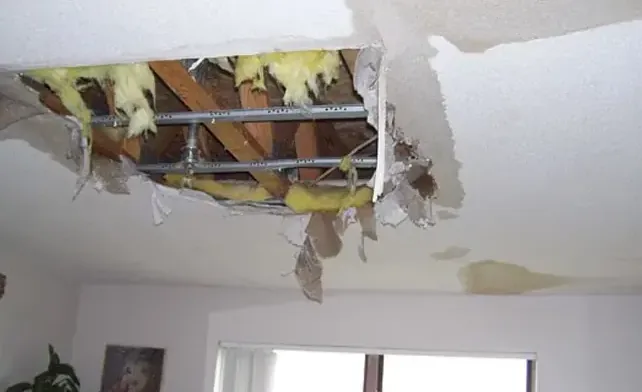
$2,800 to $5,500- Ceiling and wall sections opened
- Wet insulation removed
- LGR dehumidifiers and daily logs
Long hidden leak
$5,500 to $7,500+- Water spread through several cavities
- Baseboards, drywall and insulation removed
- Extended drying with full records
Ranges are typical, not a quote: the water category, square footage, material class and how fast drying started move the number most. The water damage cost calculator gives a closer planning range.
Burst and Pinhole Pipe Leaks, step by step
- 1
Trace the water
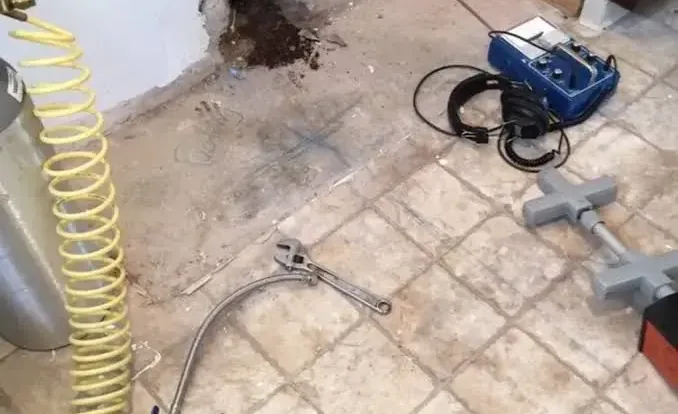
Thermal imaging and meters follow the leak through walls, ceilings and floors.
- 2
Extract
Standing water comes off the floors and out of carpet and pad.
- 3
Open and remove
Wet insulation and drywall that cannot dry in place come out in straight, documented cuts.
- 4
Dry the cavities
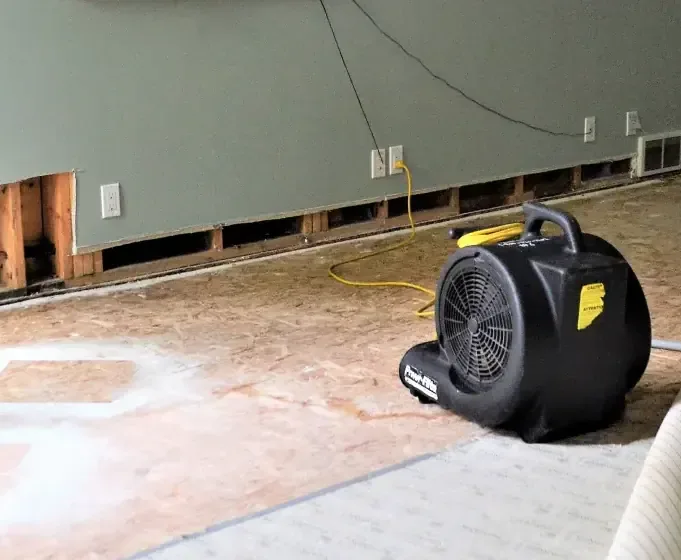
Air movers, dehumidifiers and cavity drying run until the framing reads dry.
Burst pipe or pinhole leak: why the difference matters
A burst pipe floods a room quickly and is obvious. A pinhole leak sprays a fine stream inside the wall for days or weeks before a stain, a soft baseboard or a musty smell gives it away. The slow leak usually means more hidden damage: wet insulation, swollen bottom plates and drywall that has wicked water far above the floor.
Opening walls only where the readings say
The tech who does the walkthrough uses a thermal camera and moisture meters to trace the wet area before anything is cut. Drywall is opened with a straight flood cut a short way above the highest wet reading, or through small holes for cavity drying when the wall can be saved.
- Wet insulation comes out; it does not dry in place
- Studs and bottom plates stay and get dried
- Every opening is photographed for the claim file
After the plumber repairs the pipe
Repair comes first, then drying, then the patch. Many older homes are repiped after the second or third leak, and the drying record from each loss shows what was replaced and why. The EPA's WaterSense program explains how to read the water meter to catch slow leaks early, and Ready.gov recommends knowing where the shutoff valve is before an emergency. For wet floors, see water extraction.
Burst and pinhole pipe leaks coverage and nearby areas
Coverage runs across ZIP 91352 and 91353, from the river-rock homes of Stonehurst and the streets off Sheldon and Tuxford to the yards along San Fernando Road and the hillside lots toward La Tuna Canyon.
Nearby coverage reaches Burbank, North Hollywood, Pacoima, Arleta, Panorama City, Shadow Hills, Sunland, Tujunga and Lake View Terrace.
Related water damage services
Burst and Pinhole Pipe Leaks: common questions
Why do galvanized pipes fail?
Galvanized steel rusts from the inside. Over decades the rust narrows the pipe and thins its wall until a joint or threaded end splits. Many homes built before the 1960s still have some of it.
What is a pinhole leak?
A tiny hole worn through a copper pipe wall. It sprays a fine stream inside the wall, often for weeks before a stain shows, which makes the hidden damage larger than it looks.
Does the whole wall have to come out?
No. The drying team opens only the sections that read wet, usually a straight cut near the floor, and dries the studs and plates in place.
Can the wall be dried without opening it?
Sometimes. When the leak was caught fast and the insulation stayed dry, small holes and cavity drying can do the job. The readings decide.
Should I repipe after a pinhole leak?
That is a plumbing decision. Homes with repeated pinhole leaks are often repiped, and the drying records from each leak help document the history.
Is a burst pipe covered by insurance?
Sudden and accidental pipe bursts are commonly covered, while slow leaks that ran for a long time are often excluded. Coverage depends on your policy, so check with your own insurer.
Pipe burst or wall leaking? Call now.
The extraction crew clears the water and the drying team dries the wall cavities to a verified reading.