Structural Drying and Dehumidification in Sun Valley, CA
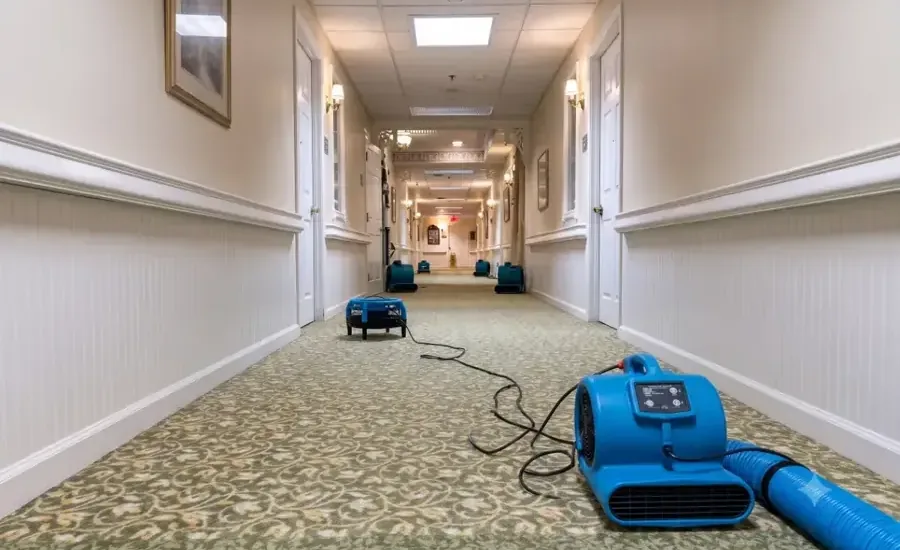
Surface dry is not dry. The drying team sets air movers and LGR dehumidifiers to each room's evaporation load and logs readings every day until framing, slab and walls match a dry reference.
(888) 578-6508Floors still wet underneath? Call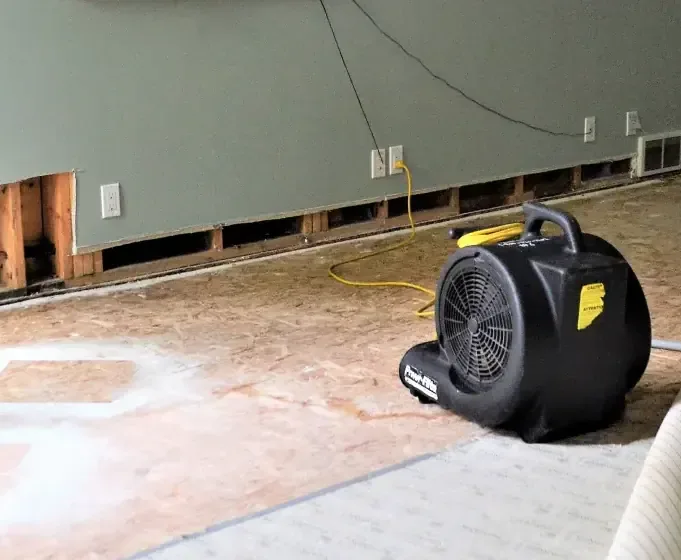
First steps for structural drying and dehumidification
Keep it closed up
Keep windows and doors shut so the dehumidifiers control the air.
Leave the equipment running
Do not switch off air movers or dehumidifiers, even overnight.
Keep paths clear
Leave the equipment where it sits and keep walkways and cords clear.
Report changes
Tell the drying team about new smells, stains or swelling between visits.
How structural drying and dehumidification is handled
Structural drying is the part of a water job that decides whether hidden damage shows up later. Water that soaks into a slab, a bottom plate or the back of drywall does not leave because the room looks dry. It leaves when the air around it is drier than the material and moving across it, and the drying team builds that condition on purpose.
Rapid local response
Active water is treated as urgent at any hour, so the extraction crew starts while the water is still on the surface.
IICRC S500 drying standard
Moisture mapping comes first, then extraction, air movers and LGR dehumidifiers sized to the class of loss.
Claim-ready documentation
The mitigation team keeps a moisture map, daily psychrometric logs and timestamped photos for the adjuster.
Valley water know-how
Slab floors, copper under concrete, hard water and storm runoff with nowhere to drain shape each drying plan.
What does structural drying and dehumidification cost in Sun Valley, CA?
Structural drying here usually runs $1,500 to $8,000, depending on the number of rooms, the class of loss, the materials involved and how many days the equipment runs. Concrete, hardwood and plaster take longer and cost more to dry.
One or two rooms
$1,500 to $3,000- Air movers and one dehumidifier
- Daily readings
- Three to four days
Several rooms or a slab
$3,000 to $5,500- LGR dehumidifiers and cavity drying
- Slab or subfloor drying
- Four to six days
Class 4 materials
$5,500 to $8,000+- Desiccant dehumidification
- Hardwood, plaster or concrete
- Extended monitoring
Ranges are typical, not a quote: the water category, square footage, material class and how fast drying started move the number most. The water damage cost calculator gives a closer planning range.
Structural Drying and Dehumidification, step by step
- 1
Set the dry standard
Readings on unaffected materials set the dry reference each wet material must reach.
- 2
Size the equipment
Air movers and dehumidifiers are matched to the class and the room's evaporation load.
- 3
Monitor daily
The drying team logs psychrometric and moisture readings and adjusts the setup.
- 4
Verify and remove
Equipment comes out when every marked point matches the dry reference.
How the drying plan is set
- Category of water: clean, gray or black decides what stays and what goes
- Class of loss, 1 to 4: how much water and how much evaporation load the room carries
- Materials: drywall, wood framing, concrete, plaster and hardwood each dry at their own pace
- Air: temperature and humidity inside and out, measured and logged
Air movers go where they push air across wet surfaces, LGR dehumidifiers handle most homes, and desiccant units take on dense Class 4 materials such as concrete and hardwood.
Dry air in summer, damp air in winter
The Valley's dry summer air helps, but a closed house with dehumidifiers controlling the air still dries better than open windows, which let in heat, dust and uneven humidity. Winter storm weeks bring damp air, so equipment runs longer. Either way, the readings decide when the job is done, not the calendar.
What a dry-out record contains
Each day the drying team records temperature, relative humidity and grains per pound inside and outside, plus moisture readings at marked points on each wet material. That psychrometric log shows the adjuster the structure reached its drying goal. The EPA stresses drying wet materials within 24 to 48 hours, and its indoor air quality pages cover why indoor humidity matters. Every dry-out starts with water extraction.
Structural drying and dehumidification coverage and nearby areas
Coverage runs across ZIP 91352 and 91353, from the river-rock homes of Stonehurst and the streets off Sheldon and Tuxford to the yards along San Fernando Road and the hillside lots toward La Tuna Canyon.
Nearby coverage reaches Burbank, North Hollywood, Pacoima, Arleta, Panorama City, Shadow Hills, Sunland, Tujunga and Lake View Terrace.
Related water damage services
Structural Drying and Dehumidification: common questions
What is structural drying?
Drying the building itself, framing, subfloor, slab, drywall and plaster, not just the surfaces you can see. It uses air movers, dehumidifiers and daily readings to reach a measured goal.
What does within 2 to 4 points of dry mean?
Moisture readings on the wet material are compared with the same material in an unaffected area. The goal is reached when the wet readings sit within a few points of that dry reference.
Why not just open the windows?
Outside air brings uneven heat and humidity and lets dust in. A closed house with dehumidifiers controlling the air dries faster and more predictably.
What is the difference between LGR and desiccant dehumidifiers?
LGR units cool the air to pull moisture out and suit most homes. Desiccant units use a drying wheel and reach very dry air for dense materials like hardwood and concrete.
How long does structural drying take?
Most clean-water losses dry in three to five days. Slabs, hardwood, plaster and Class 4 losses take longer, and the readings decide.
Is the equipment loud?
Air movers and dehumidifiers make a steady noise and run day and night. The drying team places them to keep walkways clear and adjusts the setup as rooms dry.
Walls or floors still wet underneath? Call now.
The drying team sizes the equipment, logs readings every day and removes it only when the structure is dry.