Sewage Backup Cleanup in Sun Valley, CA
A sewage backup is Category 3 from the moment it happens. The mitigation team contains the area, removes soaked porous materials, applies an EPA-registered antimicrobial and dries what remains.
(888) 578-6508Sewage on the floor? Call for cleanup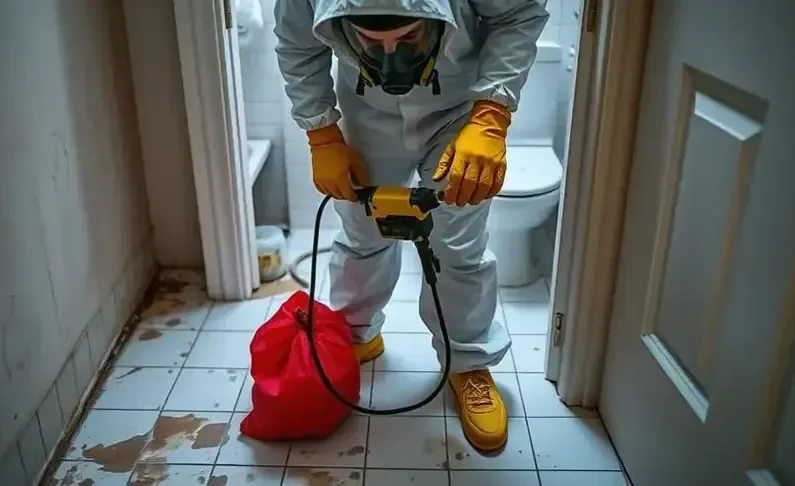
First steps for sewage backup cleanup
Stop using water
Do not flush, shower or run appliances; every gallon down the drain can come back up.
Keep everyone out
Close off the area and keep kids and pets away from the water.
Switch off the HVAC
Turn off heating and cooling that could spread odor and contaminants.
Get the clog cleared
A plumber has to clear the lateral before cleanup can finish.
How sewage backup cleanup is handled
Older homes in the neighborhood drain through clay or cast iron sewer laterals that crack, sag and let tree roots in. When the lateral clogs, wastewater comes up through the lowest drain in the house: a shower, a tub or a toilet. Heavy winter rain can make it worse when storm water seeps into the sewer system.
Rapid local response
Active water is treated as urgent at any hour, so the extraction crew starts while the water is still on the surface.
IICRC S500 drying standard
Moisture mapping comes first, then extraction, air movers and LGR dehumidifiers sized to the class of loss.
Claim-ready documentation
The mitigation team keeps a moisture map, daily psychrometric logs and timestamped photos for the adjuster.
Valley water know-how
Slab floors, copper under concrete, hard water and storm runoff with nowhere to drain shape each drying plan.
What does sewage backup cleanup cost in Sun Valley, CA?
Sewage backup cleanup here usually runs $2,000 to $10,000 or more. Category 3 work costs more per square foot than clean water because of protective gear, containment, removal of porous materials and antimicrobial treatment; the wet area and depth set the rest.
Bathroom or small area
$2,000 to $4,000- One bathroom or hallway
- Containment and removal
- Antimicrobial and drying
Several rooms
$4,000 to $7,500- Carpet, pad and lower drywall removed
- HEPA air scrubbers
- Cleaning and treatment of framing
Large backup
$7,500 to $10,000+- Most of a floor affected
- Wide removal and cleaning
- Extended drying and verification
Ranges are typical, not a quote: the water category, square footage, material class and how fast drying started move the number most. The water damage cost calculator gives a closer planning range.
Sewage Backup Cleanup, step by step
- 1
Contain
Plastic barriers and HEPA air scrubbers isolate the affected rooms.
- 2
Remove
Sewage is extracted and soaked porous materials are bagged and taken out.
- 3
Clean and treat
Hard surfaces and framing are cleaned and treated with an EPA-registered antimicrobial.
- 4
Dry and verify
Air movers and dehumidifiers dry the structure, and readings confirm it is dry before rebuilding.
Why sewage is handled differently
Sewage carries bacteria, viruses and parasites, so restoration standards treat it as Category 3 the moment it happens. Cleanup follows a stricter path than clean water:
- Minimum protection for the crew: respirator, gloves, eye protection and disposable suits
- Porous materials it soaked, such as carpet, pad, drywall and insulation, are removed and bagged, with a margin above the highest wet reading
- Hard surfaces are cleaned, then treated with an EPA-registered antimicrobial for its full dwell time
- Containment and HEPA air scrubbers keep the work area separate from the rest of the house
The sewer lateral and the street sewer
The lateral from the house to the street sewer is usually the property owner's responsibility, while the main in the street belongs to the city. A plumber clears or repairs the lateral; the restoration team cleans, treats and dries the house. The EPA explains how sewer overflows happen on its sanitary sewer overflow page, and OSHA sets the worker protection rules crews follow around wastewater.
What not to do after a backup
- Do not run water or flush toilets until the clog is cleared
- Do not mop carpet with bleach; it does not make it safe
- Do not run heating or cooling that pulls air from the affected rooms
When the backup came in with storm water, the same Category 3 steps apply as in storm and street flooding cleanup.
Sewage backup cleanup coverage and nearby areas
Coverage runs across ZIP 91352 and 91353, from the river-rock homes of Stonehurst and the streets off Sheldon and Tuxford to the yards along San Fernando Road and the hillside lots toward La Tuna Canyon.
Nearby coverage reaches Burbank, North Hollywood, Pacoima, Arleta, Panorama City, Shadow Hills, Sunland, Tujunga and Lake View Terrace.
Related water damage services
Sewage Backup Cleanup: common questions
Is a sewage backup dangerous?
Yes. Sewage carries bacteria, viruses and parasites, so it is treated as Category 3 water. Keep people and pets out of it and leave the cleanup to a crew in protective gear.
Can carpet be cleaned after a sewage backup?
No. Carpet and pad soaked by sewage are removed. Hard flooring, tile and the slab are cleaned, treated with antimicrobial and dried.
What causes sewage backups in older homes?
Most start in the sewer lateral: roots through clay pipe joints, sagging or cracked cast iron, grease buildup and things flushed that should not be. Heavy rain can add to the problem.
Who is responsible for the sewer lateral?
The lateral from the house to the street sewer is usually the property owner's responsibility. A plumber clears or repairs it, and the restoration team handles the cleanup inside.
Does insurance cover a sewage backup?
Many standard policies exclude sewer backup unless a specific endorsement was added. Coverage depends on your policy, so check with your own insurer.
How long does sewage cleanup take?
A bathroom-sized backup is often cleaned and treated in a day, then dried over two to four days. Larger losses take longer, and the readings decide when it is finished.
Sewage backing up into the house? Call now.
The mitigation team contains the area, removes contaminated materials, treats every surface and dries the structure.