Appliance and Supply Hose Leaks in Sun Valley, CA
A burst washer hose or a cracked ice-maker tube can flood a kitchen or laundry room. The extraction crew clears the water and checks under cabinets and flooring, and the drying team dries the slab and walls.
(888) 578-6508Washer or dishwasher flooded? Call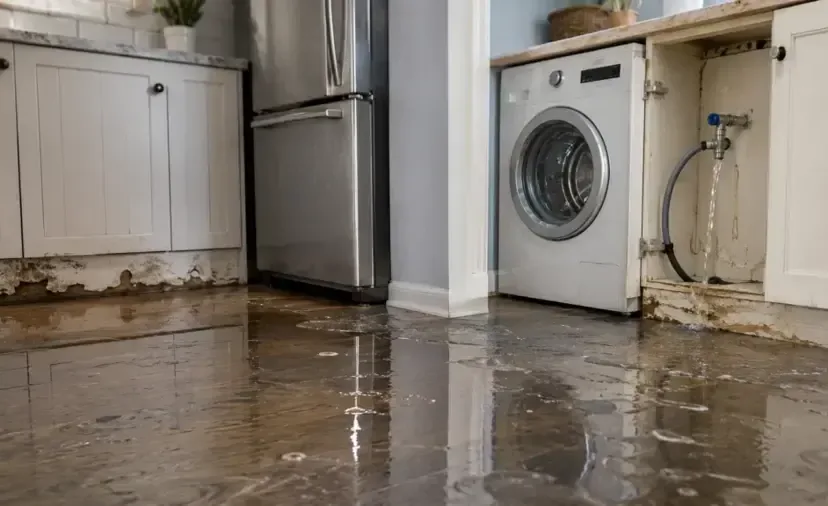
First steps for appliance and supply hose leaks
Close the valve
Shut the valve behind the appliance or under the sink; use the main if it will not turn.
Unplug only if safe
Unplug the appliance only if the outlet and your feet are dry.
Empty and lift
Empty lower cabinets and lift rugs so air can reach the floor.
Keep the failed part
Save the burst hose or cracked fitting; insurers and manufacturers may ask for it.
How appliance and supply hose leaks is handled
Rubber washing machine hoses, plastic ice-maker tubing and braided toilet supply hoses all age, and a hose under full house pressure releases a lot of water fast. Washer and dishwasher drain water is Category 2, so it is cleaned as well as dried.
Rapid local response
Active water is treated as urgent at any hour, so the extraction crew starts while the water is still on the surface.
IICRC S500 drying standard
Moisture mapping comes first, then extraction, air movers and LGR dehumidifiers sized to the class of loss.
Claim-ready documentation
The mitigation team keeps a moisture map, daily psychrometric logs and timestamped photos for the adjuster.
Valley water know-how
Slab floors, copper under concrete, hard water and storm runoff with nowhere to drain shape each drying plan.
What does appliance and supply hose leaks cost in Sun Valley, CA?
Appliance and supply hose leak cleanup here usually runs $800 to $5,500. The cost depends on the wet area, whether the water was clean or drain water, whether cabinets or flooring have to come out and how long the leak ran before someone found it.
Laundry room or one area
$800 to $2,000- Extraction and drying
- Toe kicks removed for airflow
- Two to four days of drying
Kitchen with cabinets
$2,000 to $4,000- Water under cabinets and flooring
- Vinyl or laminate lifted
- Cabinet base drying
Long-running leak
$4,000 to $5,500+- Several rooms and walls affected
- Swollen cabinets and drywall removed
- Extended drying with records
Ranges are typical, not a quote: the water category, square footage, material class and how fast drying started move the number most. The water damage cost calculator gives a closer planning range.
Appliance and Supply Hose Leaks, step by step
- 1
Find the edges
Meters map how far the water went under cabinets, under flooring and into walls.
- 2
Extract
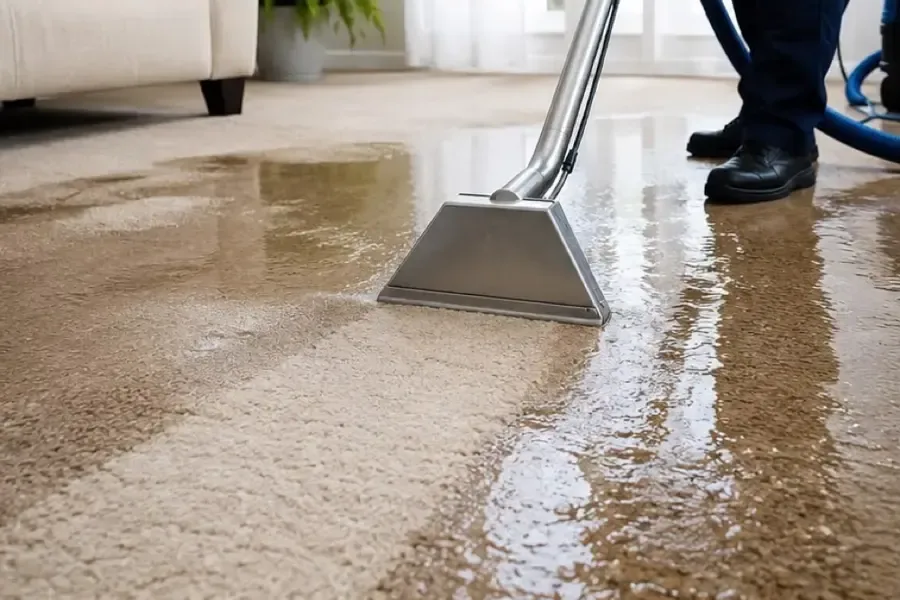
Standing water comes off floors, out of carpet and from under appliances.
- 3
Open the hiding spots
Toe kicks come off and flooring lifts wherever water is trapped.
- 4
Dry and verify
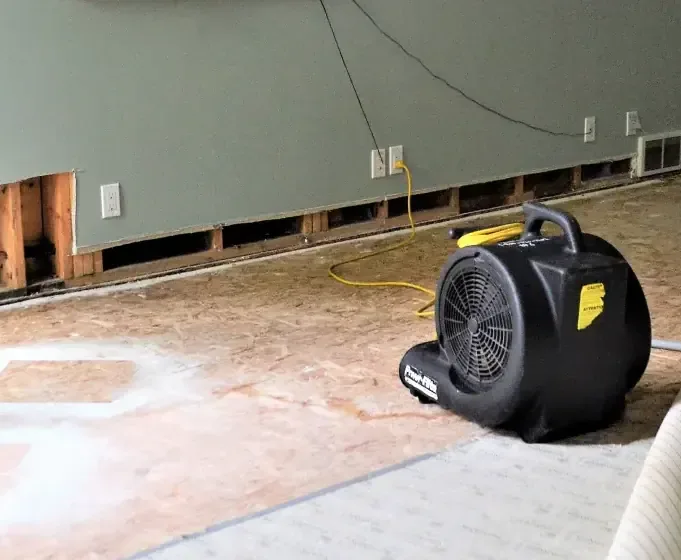
Air movers, dehumidifiers and cabinet drying run until readings match dry materials.
The common culprits
- Washing machine fill hoses that bulge, crack or blow off at the valve
- Dishwasher supply and drain connections under the sink
- Refrigerator ice-maker tubing pinched or cracked behind the fridge
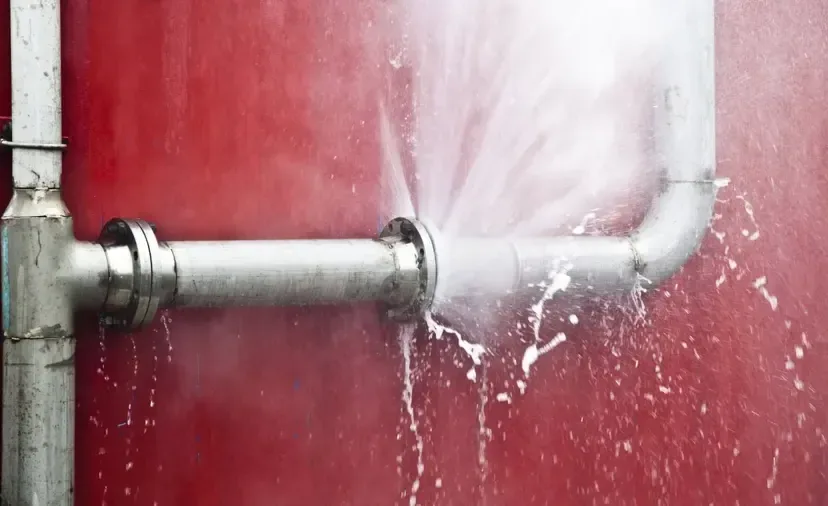
- Toilet supply hoses and fill valves that fail with no one home
Many of these leaks start while the house is empty, so the water has time to spread under cabinets and flooring before anyone sees it.
Why kitchens and laundry rooms hide water
Cabinets sit on a base that traps water underneath, and particleboard swells once it soaks. The drying team removes toe kicks or drills small holes to push dry air under the cabinets, and lifts vinyl or laminate where water slid beneath it. Solid wood cabinets can often be dried; swollen particleboard usually cannot. For leaks from a pipe rather than a hose, see burst and pinhole pipe leaks.
Preventing the next appliance leak
Braided stainless hoses, replaced every five years or so, outlast rubber ones. Turning off the washer valves before a trip and adding a leak sensor with an automatic shutoff valve help too. The EPA's WaterSense program has leak-check tips, and the Consumer Product Safety Commission posts appliance recalls.
Appliance and supply hose leaks coverage and nearby areas
Coverage runs across ZIP 91352 and 91353, from the river-rock homes of Stonehurst and the streets off Sheldon and Tuxford to the yards along San Fernando Road and the hillside lots toward La Tuna Canyon.
Nearby coverage reaches Burbank, North Hollywood, Pacoima, Arleta, Panorama City, Shadow Hills, Sunland, Tujunga and Lake View Terrace.
Related water damage services
Appliance and Supply Hose Leaks: common questions
How often should washing machine hoses be replaced?
Rubber hoses are commonly replaced about every five years, and braided stainless hoses last longer. Bulging, cracking or rust at the fittings means they should be replaced now.
Is washing machine water clean?
Water from the supply hose is clean. Water from the drain or from the tub after a cycle is Category 2 and gets cleaned as well as dried.
Can kitchen cabinets be saved?
Solid wood cabinets often dry well. Particleboard bases that swelled usually have to be replaced, and the readings decide.
Why is the floor wet in the next room?
Water slides under vinyl, laminate and walls, so it often spreads well past the appliance before it shows.
Is an appliance leak covered by insurance?
Sudden leaks from a burst hose are commonly covered, while slow leaks and the appliance itself often are not. Coverage depends on your policy, so check with your own insurer.
How long does it take to dry a kitchen?
Most kitchen and laundry losses dry in three to five days once the cabinets and flooring are opened for airflow.
Kitchen or laundry room flooded? Call now.
The extraction crew clears the water and the drying team dries under cabinets, flooring and walls to the S500 standard.