Appliance Leak Water Damage Cleanup in Pasadena
Washers, dishwashers, refrigerator ice makers and their hoses leak quietly in apartments and houses alike. Pasadena crews extract the water, dry floors and cabinet bases under the appliance, and record the readings for the claim.
(888) 578-6508Request appliance leak help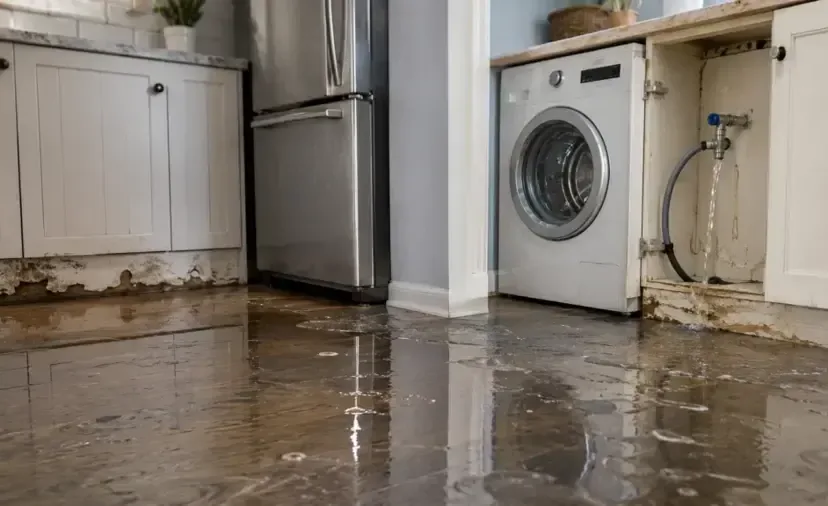
First steps for appliance and supply hose leaks
Close the supply
Turn off the valve behind the washer, dishwasher or fridge, or the main if there is no valve.
Unplug and move
Unplug it only if the outlet is dry, then pull the appliance out to see the wet floor.
Photograph it
Capture the hose or fitting, the wet floor and cabinet bases before wiping anything.
Start drying
Have the water extracted and the cabinet bases opened for air before swelling sets in.
How appliance and supply hose leaks is handled
Appliance leaks are slow and easy to miss. A cracked hose behind a washer or a loose dishwasher fitting can wet the floor and cabinet base for days before a stain or smell shows up.
Rapid local response
Active water is treated as urgent at any hour, so the extraction crew starts while the water is still on the surface.
IICRC S500 drying standard
Moisture mapping comes first, then extraction, air movers and LGR dehumidifiers sized to the class of loss.
Claim-ready documentation
The mitigation team keeps a moisture map, daily psychrometric logs and timestamped photos for the adjuster.
Valley water know-how
Slab floors, copper under concrete, hard water and storm runoff with nowhere to drain shape each drying plan.
What does appliance and supply hose leaks cost in Pasadena, CA?
Appliance leak cleanup in Pasadena commonly runs $800 to $2,000 for a laundry room or one area, $2,000 to $4,000 for a kitchen with cabinets, and $4,000 to $5,500 or more for a long-running leak. Hidden spread under floors raises the total.
Laundry room or one area
$800 to $2,000- Extraction and drying done
- Toe kicks removed for airflow
- A few days of drying
Kitchen with cabinets
$2,000 to $4,000- Water under cabinets and flooring
- Vinyl or laminate lifted
- Cabinet base drying
Long-running leak
$4,000 to $5,500+- Several rooms and walls affected
- Swollen cabinets and drywall removed
- Longer drying with records
Ranges are typical, not a quote: the water category, square footage, material class and how fast drying started move the number most. The water damage cost calculator gives a closer planning range.
Appliance and Supply Hose Leaks, step by step
- 1
Locate the water
A moisture meter finds how far the leak traveled under the appliance, cabinets and floor.
- 2
Extract and lift
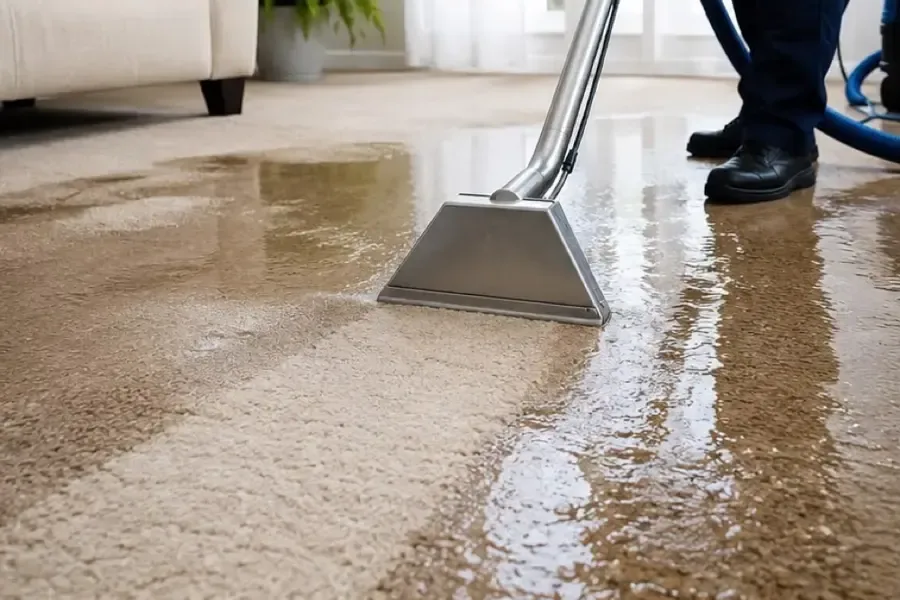
Standing water is pulled out and loose flooring is lifted where water is trapped.
- 3
Open for airflow
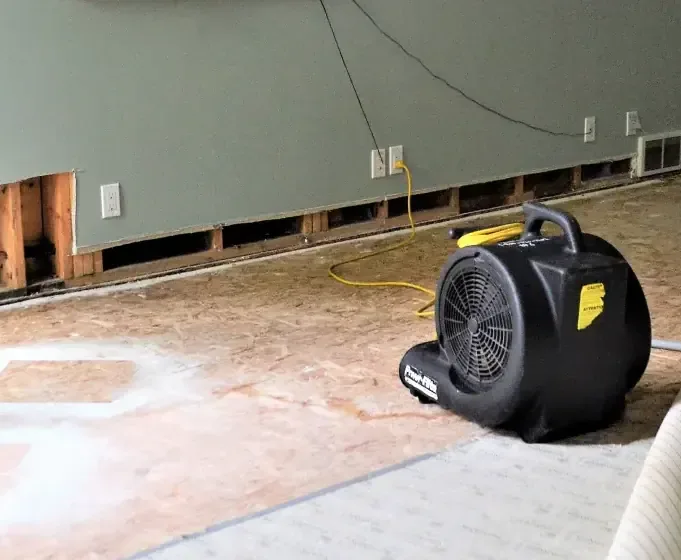
Toe kicks and wet baseboards come off so air movers can reach hidden surfaces.
- 4
Dry and document
Dehumidifiers run until readings match dry standards, with photos and logs saved.
Where appliance water hides
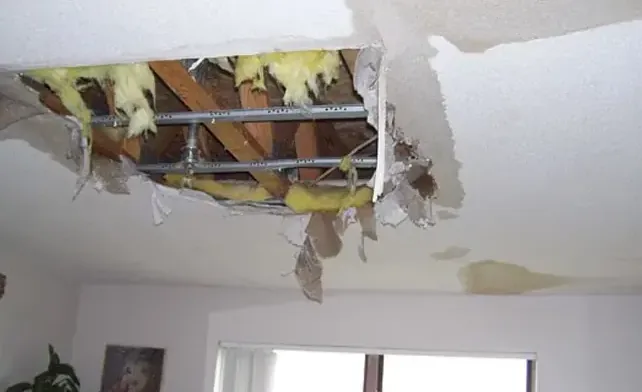
Water from a dishwasher or ice maker travels under vinyl, laminate and cabinet bases, where it cannot evaporate. Washer leaks in laundry rooms often reach the wall bottoms, and a leak on an upper floor drips into the ceiling below.
Apartments and shared walls
SCAG data counts 30,998 renter-occupied units among 54,394 housing units, so a laundry or kitchen leak can easily reach the neighbor below. Photos, readings and a clear record of the source help the owner, the tenant and the building manager sort out who handles what.
Drying cabinet bases and floors
Toe kicks come off so air can reach the cabinet base, and vinyl or laminate planks are lifted where moisture is trapped beneath. Swollen particleboard or drywall that has lost its shape is removed rather than dried, and the rest is dried with air movers and dehumidifiers.
After the hose is fixed
The plumber or appliance technician fixes the failed hose, valve or drain connection, and restoration handles everything the water touched. For leaks that reached a wall or ceiling, see burst pipe water damage and ceiling leak water damage.
Appliance and supply hose leaks coverage and nearby areas
Appliance leak work covers apartments and houses across the city, from Hastings Ranch and Linda Vista to Jefferson Park, Lincoln-Villa, Oak Knoll and Lamanda Park. Laundry rooms and kitchens are the usual starting points.
The same service nearby: appliance and supply hose leaks in Sun Valley, San Marino, South Pasadena.
Related water damage services in Pasadena
Appliance and Supply Hose Leaks: common questions
Which appliance leaks do the most damage?
Long-running ones. A slow drip from a dishwasher hose or ice maker connection can soak a cabinet base for days, while a burst washer hose is fast and obvious.
Can swollen cabinets be saved?
Sometimes. Solid wood often dries, but particleboard that has swelled usually stays swollen, so it is replaced after readings show it cannot recover.
What if a neighbor's appliance leaks into another unit?
The source and the path of the water matter. Photos, readings and notes help the owner, tenant and building manager work out responsibility, while drying starts in the wet unit.
Do floors need to be pulled up?
Often only where water is trapped. Vinyl and laminate planks may be lifted to dry the subfloor, while sealed hard floors are checked with a meter first.
How long does drying take after a hose leak?
Small leaks often dry in a few days, while kitchens with wet cabinets take longer. Daily readings decide when equipment comes out.
Should the appliance be replaced?
That depends on the repair technician. Restoration deals with the water, and the hose, valve or drain connection should be fixed before drying begins so the leak does not return.
Dry the floor and cabinet base
Appliance leak crews work in Pasadena apartments and houses, drying floors and cabinets with readings kept for the claim.