A backup is one of the worst water problems a household can face, and in Pasadena it often traces back to pipe that has been underground for generations. The city's own figures put its sewer system at an average of 91 years old.
Key takeaways
- More than 90 percent of the city's sewer pipe is vitrified clay, and the city lists heavy root intrusion and old pipes and manholes as known problems.
- Under the municipal code the property owner maintains the house sewer, which runs past the edge of the property into the street to the city main.
- Sewage coming up from a manhole is reported to the City of Pasadena Citizen Service Center.
- A backup inside a building is Category 3 water, and porous materials it touched are usually removed.
- Stop using water, keep people out of the area and photograph the damage before cleanup begins.
Why backups happen in an old clay system
The city's sewer pipe ranges from 18 to 138 years old, and more than 90 percent of it is vitrified clay. Clay lasts a long time, but joints open and roots find them.
The city names roots and grease build up as the common causes of house sewer blockages. It also lists heavy root intrusion and old, deteriorated pipes and manholes as known problems in the public system.
Because a blockage can sit in the private house sewer or farther out in the main, a plumber's camera inspection is the usual way to find out which.
- Roots enter at joints and grow into a dense mat that catches paper and grease.
- Grease poured down kitchen drains hardens and narrows the pipe.
- Old or cracked pipe can let soil and debris into the flow.
Where the house sewer ends and the city main begins
The split between public and private pipe decides who deals with a blockage, so it helps to know where it falls. A homeowner who is unsure can ask the plumber to confirm it.
The owner's part
Under the Pasadena Municipal Code, the property owner maintains the house sewer. The city says that private pipe extends beyond the property boundary into the street, all the way to the city sewer main.
The city advises annual cleaning and inspection of the house sewer.
The city's part
The Department of Public Works owns and maintains the sewer mains. Those mains connect to trunk sewers run by the Sanitation Districts of Los Angeles County.
Sewage coming up from a manhole in the street is reported to the Citizen Service Center. The city also says it is illegal to open a manhole, so the cover stays closed.
Signs a backup is starting
Backups rarely arrive without warning. The earliest signs show up in the fixtures closest to the lowest drain in the house.
- Gurgling from a toilet or tub when the washing machine drains
- Slow drains in more than one fixture at the same time
- Water or sewage rising in a floor drain or a shower
- A sewage smell near a drain that was fine before
What to do right away
Sewage water carries bacteria, so the first steps are about keeping people away from it and keeping more water out of the pipe.
Chemical drain cleaners are best left alone once a drain is backing up, because the splash back and the fumes add a second hazard.
- Stop running water, flushing toilets and using the washer or dishwasher.
- Keep children, pets and anyone with a health condition out of the wet area.
- Do not wade through the water barefoot or use a household vacuum on it.
- Photograph the water, the drain it came from and the damaged items.
- Call a plumber to clear the blockage and a restoration crew for the cleanup.
- Report sewage rising from a manhole in the street to the Citizen Service Center.
How the cleanup handles Category 3 water
Extraction and containment
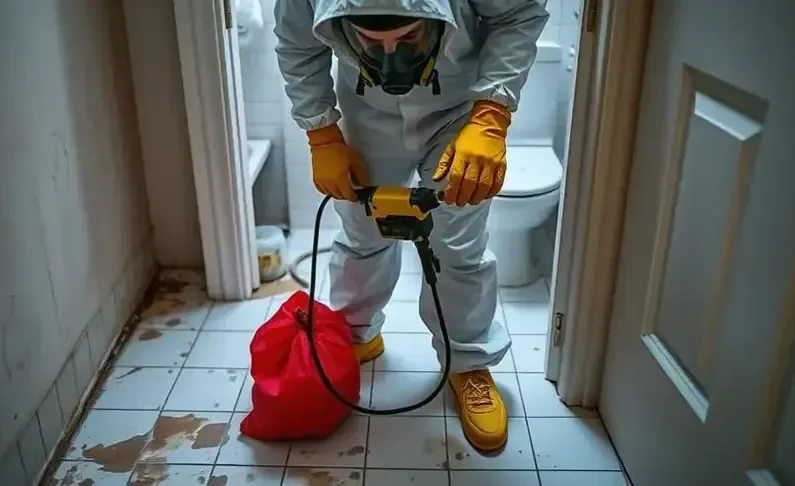
The crew pumps out the contaminated water first, wearing protective gear. Plastic sheeting may seal the area so the rest of the home stays clean.
This is the heart of sewage backup cleanup, where the order of steps matters as much as the equipment.
Air scrubbers with HEPA filters may run during demolition to keep dust and odor from spreading through the house.
What gets removed
Porous materials soaked by sewage cannot be made safe by drying alone. Carpet, pad, insulation and the lower part of drywall are cut out and bagged.
- Carpet and pad
- Baseboards and wet drywall
- Cabinet toe kicks and low insulation
- Soaked cardboard, fabric and paper goods
Cleaning, disinfecting and drying
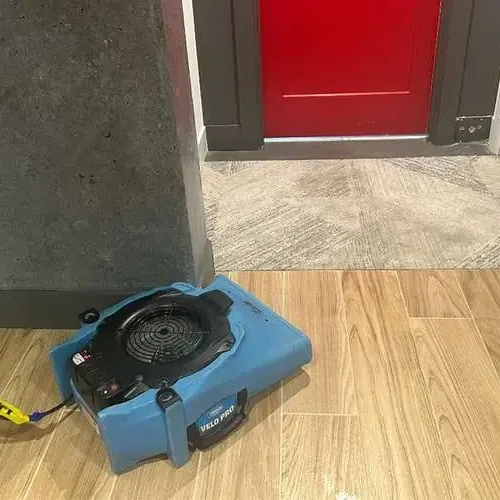
Concrete, tile and framing are scrubbed and disinfected. Drying equipment then removes the moisture that is left, with readings repeated until the structure is back to normal.
Where water spread widely, water extraction comes first so the contamination does not travel further.
Apartments, rentals and shared drains
SCAG data lists 30,998 renter occupied units among 54,394 housing units, so shared buildings make up a big part of the housing stock. In a building with shared drains, a backup can show up in a unit far from the blockage.
Tenants should tell the owner or manager right away so the source can be cleared and neighboring units checked.
Owners and managers can speed things up by shutting off water to the affected units and keeping tenants out of wet hallways and laundry rooms.
Tenants and owners can find the full list of local water damage services for a building like this, including drying after the backup is cleared.
Lowering the odds of a repeat and keeping a record
No homeowner can change the age of the pipe, but a few habits reduce the load on it. The city's own advice is a good starting point.
Once the area is dry and the materials are replaced, the record of the job is worth keeping. It should show the readings, the photos and a list of what was removed.
The sewage backup cleanup service page explains the full sequence that crews follow, including why porous materials are never dried in place after a sewage loss.
- Keep grease, oil and wipes out of drains, even ones sold as flushable.
- Have the house sewer cleaned and inspected once a year, as the city advises.
- Never connect patio drains, roof downspouts, pool overflow drains or footing drains to the sewer, because the city says that is illegal.
- Learn where the house sewer cleanout is before an emergency.
Questions
Who maintains the pipe from a Pasadena house to the street?
Under city code, the property owner maintains the house sewer. The city says it runs past the property boundary into the street to the city main.
Who gets the call if sewage comes up from a manhole?
Sewage rising from a manhole is reported to the Citizen Service Center. The cover should stay closed, since opening a manhole is illegal.
Do roots really cause backups?
Yes. The city names roots and grease build up as common causes of house sewer blockages and lists heavy root intrusion as a known problem in older pipe.
Is sewage cleanup different from a regular water leak cleanup?
Yes. Sewage is Category 3 water, so porous materials are removed, surfaces are disinfected and the area is dried only after that.
Does a plumber or a restoration crew come first?
Both are needed. A plumber clears the blockage so no new water arrives, and the restoration crew removes the contaminated water and damaged materials.
Can a backup be a sign of a blocked city main?
Sometimes, but not always. The blockage may be in the house sewer or in the main, and a camera inspection by a plumber shows which.