Slab Leak Water Damage in Alhambra, CA
A leak under the floor hides behind damp flooring, a warm patch underfoot or a water bill that climbs. Testing locates the pipe first, and only then does the wet flooring come up for drying.
(888) 578-6508Report a damp floor or warm spot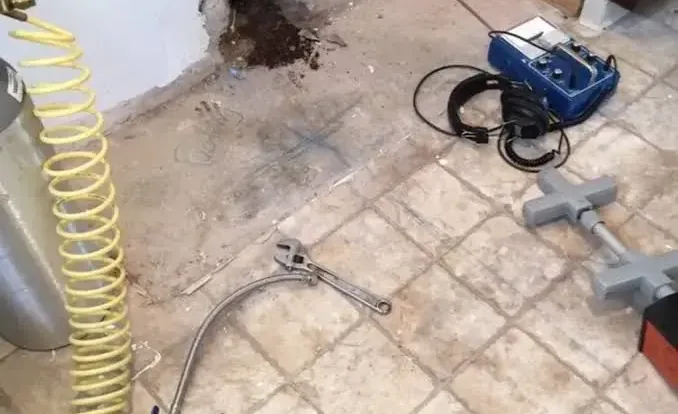
First steps for slab leak water damage
Shut off the main
Close the main valve to stop the leak from running while help is on the way.
Check the meter
Turn every fixture off. If the meter still turns, water is escaping somewhere in the pipes.
Photograph the signs
Record damp flooring, stains and the meter reading so the claim has a record.
Call for testing
Describe the warm spots and damp floors, and the crew plans testing and drying.
How slab leak water damage is handled
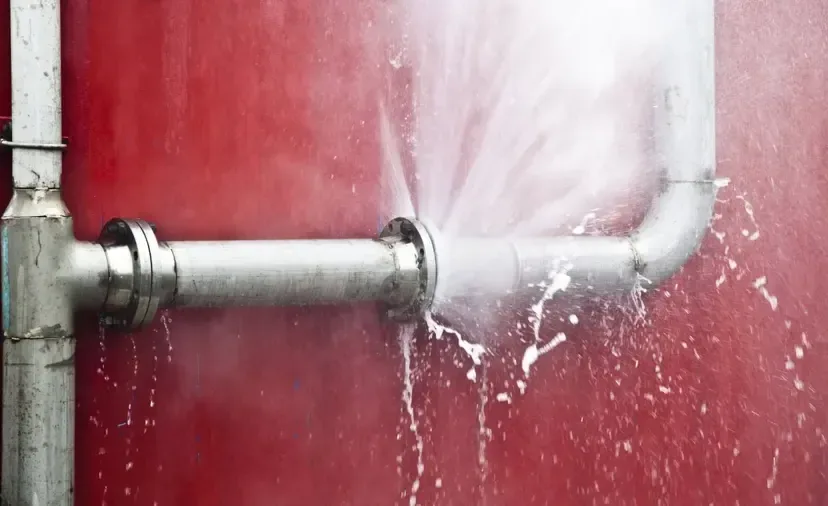
A slab leak is a pressurized pipe leaking beneath a concrete floor. Housing in Alhambra spans the early 1900s to the 1940s and later, and which homes have concrete floors is something testing and inspection settle, not guesswork. Until the leak is located, nothing gets opened.
Rapid local response
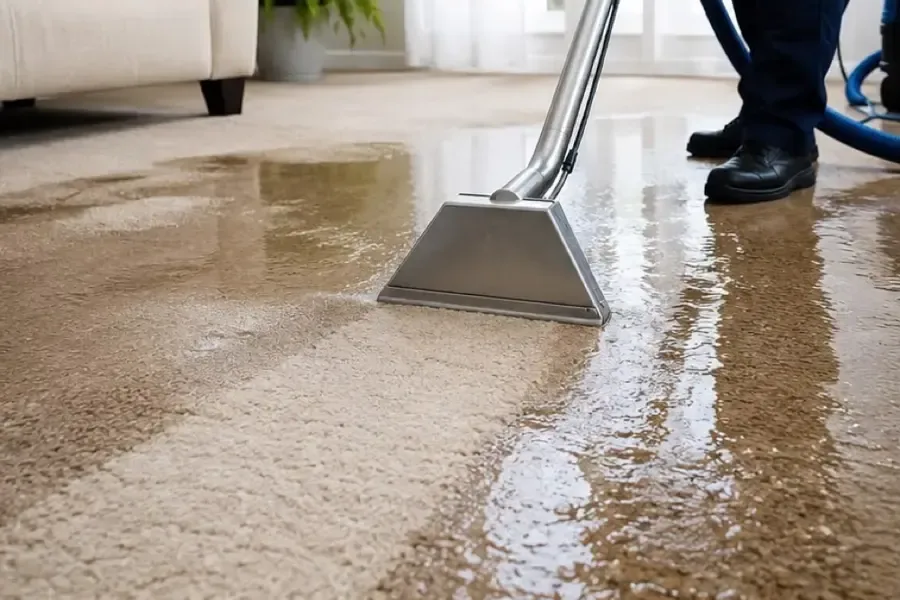
Active water is treated as urgent at any hour, so the extraction crew starts while the water is still on the surface.
IICRC S500 drying standard
Moisture mapping comes first, then extraction, air movers and LGR dehumidifiers sized to the class of loss.
Claim-ready documentation
The mitigation team keeps a moisture map, daily psychrometric logs and timestamped photos for the adjuster.
Valley water know-how
Slab floors, copper under concrete, hard water and storm runoff with nowhere to drain shape each drying plan.
What does slab leak water damage cost in Alhambra, CA?
A small area near the leak usually costs $1,800 to $3,500. Several rooms run $3,500 to $6,000, and a long-running leak that soaked most of a floor can reach $6,000 to $8,000 or more. Slab and wall readings decide how long drying lasts.
Leak caught early
$1,800 to $3,500- One room or a hallway
- Flooring lifted where wet
- Dehumidifier running on the slab
Several rooms
$3,500 to $6,000- Water under carpet or laminate
- Baseboards and lower drywall cut
- Daily floor and wall readings
Leak that ran for weeks
$6,000 to $8,000+- Most of a floor wet
- Wide flooring removal
- Extended drying with records
Ranges are typical, not a quote: the water category, square footage, material class and how fast drying started move the number most. The water damage cost calculator gives a closer planning range.
Slab Leak Water Damage, step by step
- 1
Pinpoint the leak
Listening gear, pressure checks and an infrared camera trace the leak to a small spot on the floor plan.
- 2
Open the wet area
Flooring and baseboards come up over the wet zone only, and the cut edges are cleaned and documented.
- 3
Uncover the floor
With the covering gone, readings on the concrete show where water collected and how deep it went.
- 4
Dry to the goal
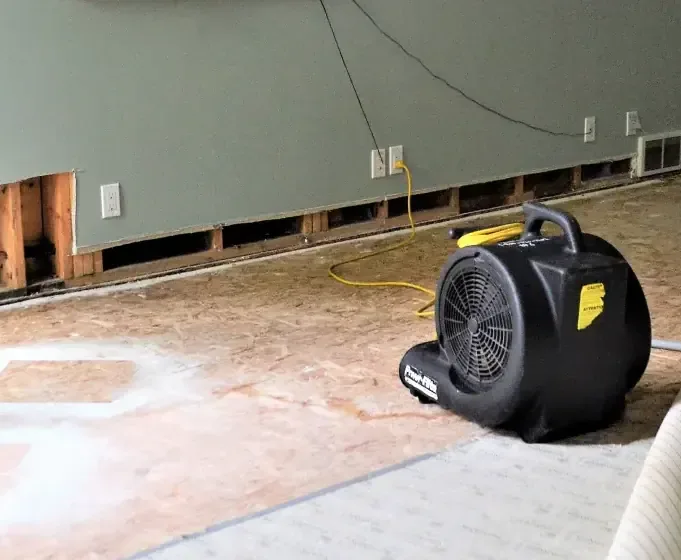
LGR dehumidifiers and air movers run until slab and wall readings match the dry goal, then the crew signs off.
Signs a leak is running under the floor
Several clues tend to show up together, and any one of them is worth a closer look before the damage spreads. A slab leak can run for weeks before flooring cups or a bill jumps, so small clues count.
- A water meter that keeps moving with every fixture turned off
- A warm spot on tile, laminate or carpet
- Baseboards that stain, cup or swell
- The sound of running water in a quiet house
- Water bills that climb with no change in use
How the leak is located
Technicians use acoustic listening, pressure tests and thermal imaging to narrow down the spot before any concrete is cut. Moisture readings in the surrounding floor and walls show how far the water traveled. Nothing is opened on a guess, which keeps the repair small and the bill predictable. A plumber then confirms the pipe and the best repair route, so the opening in the floor is no larger than it has to be.
What gets removed and what stays
Flooring over the wet area is lifted, along with baseboards and the bottom of drywall that wicked water upward. Hardwood and tile can often be saved when the leak is caught early, while carpet pad, laminate and soaked insulation usually go. The crew explains each removal before it happens.
Drying the concrete and the walls
Concrete holds water far longer than wood, so LGR dehumidifiers and air movers keep running until slab readings reach the dry goal. Moisture readings are repeated on the slab each visit, since concrete can read dry on top while holding water below. Walls are dried in the same pass, using the methods behind structural drying. A plumber repairs the pipe, and the municipal code calls for a plumbing permit on that work.
Slab leak water damage coverage and nearby areas
Slab leak calls come from houses across ZIP codes 91801 and 91803, including the 1930s homes of Mayfair Tract and the 1940s streets of Midwick Tract and Bean Tract, where a slow leak can go unnoticed for weeks.
The same service nearby: slab leak water damage in Sun Valley, South Pasadena, San Gabriel.
Related water damage services in Alhambra
Slab Leak Water Damage: common questions
How is a slab leak found without cutting the floor?
Acoustic listening, pressure tests and thermal imaging narrow the spot. Concrete is cut only after the location is confirmed, which keeps the opening small and the repair aimed at the actual pipe.
Does a slab leak always damage the flooring?
Not always. Hardwood and tile can survive a short leak, but carpet pad, laminate and wood subfloors usually soak up water and have to come out. Readings decide each material, not appearance.
How long does concrete take to dry?
Longer than wood or drywall. Most slabs need several days of dehumidification, and a leak that ran for weeks can need extra time. Daily readings, not the calendar, set the finish date.
Will insurance cover a slab leak?
Policies treat the leak and the resulting damage differently, and many cover the water damage but not the pipe repair. The adjuster decides, and logs plus photos make that conversation easier.
Who repairs the broken pipe?
A plumber, under a plumbing permit as the city's municipal code requires for plumbing repairs. The drying crew handles the water damage and coordinates timing so floors are never closed over a wet slab.
Can a renter ask for testing?
A renter should report warm spots or damp flooring to the landlord in writing, with photos. The property owner arranges the plumber, and drying records show how far the water spread.
Find the leak before the floor goes
Testing, careful removal and slab drying keep the damage from growing, and the records support an insurance claim. See water extraction if surface water is already pooling.