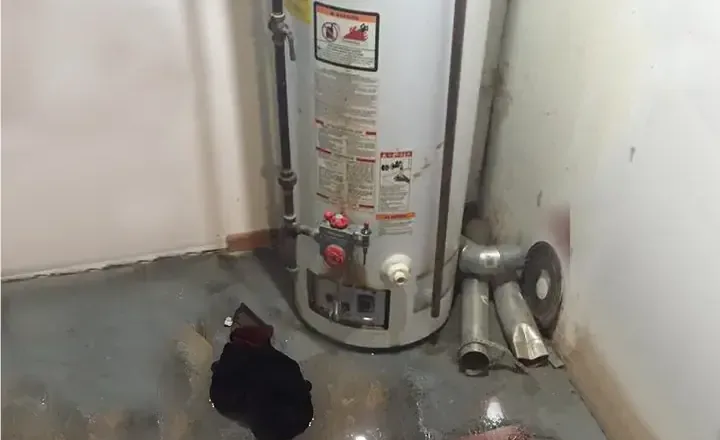
A tank water heater can hold enough water to flood a closet or garage floor, and in Pasadena the water going into it is hard. The city utility, Pasadena Water and Power (PWP), says its water averages about 250 ppm, or 14.5 grains per gallon.
Key takeaways
- PWP says hard water leaves scale in water heaters and reduces their effective lifetime.
- A leaking tank is replaced, not patched, while the wet floor and walls are extracted and dried at the same time.
- Shut off the cold water supply to the tank and the power or gas to the heater before dealing with the water.
- Where the tank sits changes the damage: a closet soaks walls, a garage spreads across the floor and a shared building can reach neighbors.
- The city has separate permit applications for standard and tankless water heaters.
What hard water does inside a tank
PWP, the city's community owned utility, reports that its water is hard, averaging about 250 ppm or 14.5 grains per gallon. The utility says hard water leaves scale on plumbing fixtures and builds up in water heaters.
That buildup is the reason PWP says hard water reduces a water heater's effective lifetime. Scale insulates the bottom of the tank, so the heater works harder, which tends to shorten its life.
As water heats, minerals separate out and settle on the tank floor. Over time the layer thickens and can trap heat against the steel.
- Scale collects at the bottom of the tank as water is heated.
- A tank that makes popping or rumbling noises is often working through scale.
- Rust stains or a weeping fitting near the bottom can signal the tank is failing.
Where a tank leak does the most harm
Closets and utility rooms
A tank in a hall closet sends water into the bottom of the walls and the floor of the room next to it. The drywall wicks the water upward, and the damage can run well past the closet door.
Hall closets also hold laundry gear and linens, which soak up water like a sponge.
Garages and laundry areas
A tank in a garage spreads water across the floor and into stored boxes, tools and bags. Cardboard soaks fast, so items on the floor go first.
A leak that starts at night can run across a garage floor for hours before anyone opens the door.
Apartments and condos
SCAG data lists 30,998 renter occupied units among 54,394 housing units in the city, so many tanks sit in shared buildings. Water from a tank in one unit can move into a wall or ceiling next door, and neighbors need to be told.
What to do when the tank lets go
The order of the first few actions matters for safety. Hot water can scald, and a gas or electric heater needs to be shut off before anyone works near it.
Water heaters run on gas or electricity, and the safe shutoff depends on which one is installed. Turning off the cold water stops the refill, and turning off the energy source keeps the heater from firing or heating an empty tank.
- Close the cold water shutoff valve above the tank.
- Turn off the electric breaker or the gas supply to the heater.
- Do not touch hot water at the tank or the pipes.
- Move items off the wet floor and photograph the tank and the water.
- Call a plumber for the repair and a restoration crew for the water.
- Electric: switch off the breaker that feeds the heater.
- Gas: turn the gas control valve to off, and leave the area if gas is smelled.
- Either type: close the cold water shutoff valve above the tank.
How the water is removed and the area dried
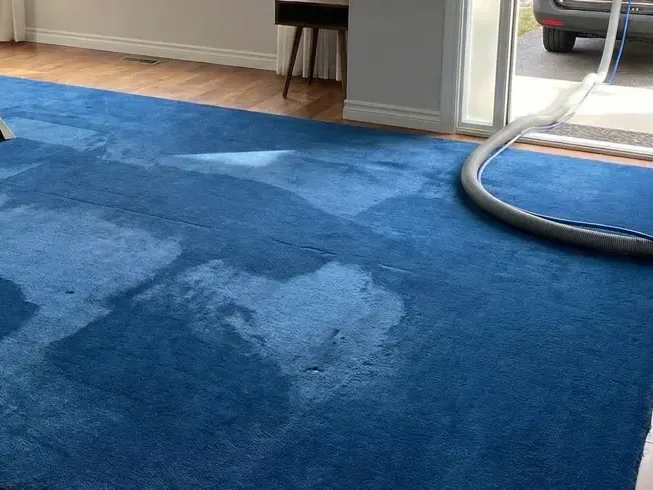
The first step is pulling the standing water off the floor, which is the job of water extraction. The faster the water leaves, the less reaches the framing and cabinets.
Next, moisture readings show how far the water went, including behind the wall and under flooring.
- Baseboards are removed so the wall bottoms can dry.
- Wet insulation behind or beside the tank is taken out.
- Vinyl, laminate or tile may be lifted so the subfloor can dry.
- Dehumidifiers and air movers run until readings return to normal.
The replacement tank and the permit side
A leaking tank is replaced, not repaired. City Building and Safety has separate permit applications for standard and tankless water heaters, so the right form depends on the type of unit being installed.
The cleanup does not have to wait for the replacement. A water heater leak cleanup can begin once the supply and power are off.
Tankless units hold very little water, so a leak from one is usually a fitting or a connection and spreads less. The cleanup steps are the same, just smaller.
Spotting a failing tank early
Not every tank fails suddenly. Many give clues first, and catching them can turn an emergency into a planned replacement.
Tank failures follow the same cleanup steps no matter the neighborhood, and the tank failure cleanup process is laid out on the main service page. The sooner a weeping tank is replaced, the smaller the cleanup is likely to be.
- Dampness or rust around the bottom of the tank
- Scale flakes or cloudy water from the tap
- Popping or rumbling while the tank heats
- A weeping relief valve or fitting
- A tank that is old enough that its replacement date is near
What a record of the loss should show
Photos of the tank, the pooled water and the damaged floor help later, whether the question is a repair estimate or a claim. The crew also keeps moisture readings and a list of removed materials.
Anyone in a shared building should keep the same record and share it with the owner or manager. Homeowners can find the full set of local services on the Pasadena hub.
A short written timeline is handy too. Note when the leak was found, when the water was shut off and when the crew arrived, so the record has a clear start.
Questions
How hard is Pasadena's water?
PWP says its water averages about 250 ppm, or 14.5 grains per gallon, which it describes as hard.
Can scale really shorten a water heater's life?
PWP says hard water builds up in water heaters and reduces their effective lifetime. A tank that is making noise or leaking at the bottom may be near the end.
Can a leaking tank be repaired?
A tank that leaks through its shell is replaced. A leaking fitting or valve may be fixed, which a plumber can judge.
Does the city have a permit process for water heaters?
City Building and Safety has separate permit applications for standard and tankless water heaters. The right one depends on the type of unit being installed.
What gets thrown out after a tank leak?
Wet insulation, soaked cardboard and carpet pad are usually removed. Tile and concrete are cleaned and dried, and drywall depends on how long it stayed wet.
What if the tank leak is slow?
A slow leak still wets framing and flooring over time. Even a small drip near the bottom of the tank is worth a plumber's visit and a moisture check of the floor.