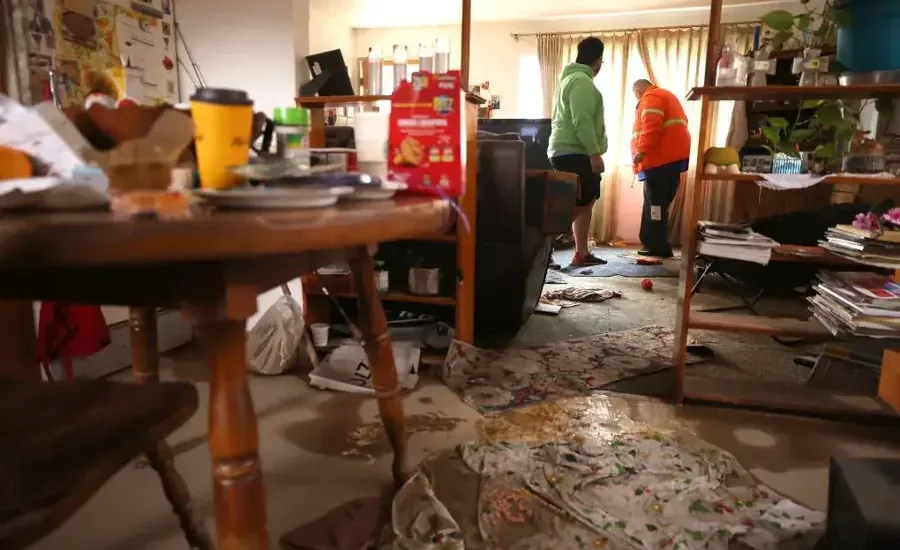
Almost all of Sun Valley's rain falls in a handful of winter storms, and much of the neighborhood was built without a full storm drain system. When a heavy storm hits, water ponds on the street and runs toward the lowest lots, and sometimes through the door.
Key takeaways
- Runoff that comes in from the street is treated as contaminated water, not clean rain.
- Garages, back rooms and slab edges take the water first because the concrete has nowhere for it to drain down.
- Porous materials such as carpet, pad and low insulation are usually removed, while hard surfaces are cleaned and dried.
- Never wade through standing water if outlets, cords or the panel may be wet.
- Photograph the waterline on walls and belongings before cleanup begins.
How street water ends up in a low lot
Sun Valley is a neighborhood of the City of Los Angeles on the northeast side of the San Fernando Valley. The Tujunga Wash and the Hansen and Tujunga spreading grounds sit along its west and north edges, and the ground is sand and gravel.
Because a full storm drain system was never built across much of the neighborhood, heavy storms pond water on streets and push it toward low lots. A driveway that slopes down toward a garage or a back room can become the path.
The flooding is not constant, which makes it easy to forget. A lot may stay dry through most storms and still take water in the one that drops rain faster than the ground can soak it up.
- Water enters at garage doors, back doors and low thresholds.
- It spreads across slab floors toward baseboards and closets.
- It can leave silt and debris behind when it drains away.
Why storm runoff counts as contaminated
Street water picks up oil, dirt, yard waste and whatever else sits on pavement and soil. By the time it reaches a building it is classed as Category 3 water, the most contaminated category.
That changes the cleanup. Materials that soak up this water are not dried and kept the way they would be after a clean pipe leak.
Timing matters too. Wet drywall and carpet that stay damp for a day or two can start to grow mold, so contaminated materials come out early.
Items with sealed, nonporous surfaces are usually the easiest to save, and the crew sorts belongings room by room.
What is usually removed
- Carpet and pad that sat in the water
- Wet insulation and the lower strip of drywall
- Cardboard boxes and stored paper goods
What is cleaned and kept
- Concrete, tile and sealed hard flooring
- Framing, which is cleaned, treated and dried
- Metal shelving and many household items
What to do while water is still coming in
Safety comes ahead of belongings. Water and electricity do not mix, and a flooded garage often has outlets, a freezer and a washer close to the floor.
Once the street water has stopped rising and the area is safe to enter, the priority is getting the water out. A crew can start extraction while the rain is still falling elsewhere in the neighborhood.
Resist the urge to run a household vacuum or a fan through contaminated water. Both can spread what is in the water and damage the equipment.
- Stay out of standing water if power may be live, and have the panel switched off only if it is dry and safe to reach.
- Lift valuables, papers and electronics above the waterline.
- Keep children and pets away from the water.
- Photograph the water, the waterline and damaged items.
- Call a restoration crew once the street water has stopped rising.
The first day of cleanup
Extraction first
The standing water goes out first with pumps and water extraction units, because water that sits keeps wicking further into walls and cabinet bases.
Silt and debris are shoveled or vacuumed out before anything is washed, so the mud is not spread around the room.
Removal and cleaning
Soaked porous materials are bagged and removed. Floors and wall bases are scrubbed and treated with a disinfectant that suits the surface.
This is the core of storm and street flooding cleanup when the water came from outside rather than from a pipe.
Drying the slab edge and wall bottoms
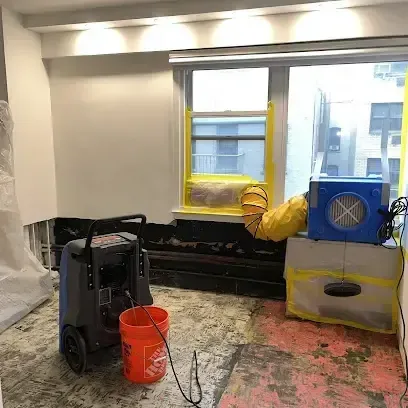
After the surfaces are clean, the slab, the framing and the wall bottoms are dried with dehumidifiers and air movers, and readings are repeated until they match unaffected areas.
Structural drying is the step that keeps a clean looking room from turning into a hidden problem.
Slab homes, garages and apartments
Postwar houses on slabs have no basement or crawl space to catch water, so it spreads thinly across the whole floor instead. A thin layer can still reach every baseboard.
Ground floor apartments and shops with low thresholds face the same spread. Industrial yards also see water collect where paving slopes toward a building.
A garage with a freezer, a washer and stored boxes loses the most. Anything cardboard that touched the water is usually a total loss, while plastic bins and metal shelving can be cleaned.
Shops, yards and apartment buildings
Sun Valley also has many industrial yards and apartment buildings. A yard with paving that slopes toward a building door can send water straight into a shop floor or a storeroom.
For a business, the first day is about stopping further water, protecting stock and records, and getting a commercial water damage plan in place so the doors can reopen.
- Move inventory and paperwork off the floor first.
- Photograph the loading doors and the waterline.
- Tell the property manager so neighboring units are checked.
Getting ready before the next storm
Because the rain comes in a few big events, a check in autumn pays off.
A few small steps help even in a dry year. The goal is to know where water goes before it arrives.
After any storm, walk the property and look for water marks on garage walls, damp patches along slab edges and soft baseboards. Catching a small problem right away keeps a cleanup small.
- Clear gutters, downspouts and the area around door thresholds.
- Note where water pooled in past storms and keep valuables off the floor there.
- Know where the main water valve and the electrical panel are.
- Keep important papers in sealed bags or a high shelf.
Questions
Does every winter storm flood Sun Valley streets?
No. Most days bring no trouble. Problems come in the few heavy storms, when rain falls faster than the ground and the street can carry it away.
Is storm water inside a house safe to clean up alone?
Street runoff is contaminated, so gloves, boots and careful disposal matter. A crew has the pumps, protective gear and disinfectants to handle it safely.
Can wet carpet be saved after street water?
Usually not. Carpet and pad that soaked up contaminated water are removed, while concrete, tile and sealed hard flooring can be cleaned and dried.
What should be photographed before cleanup?
The waterline on walls, the standing water, damaged belongings and the doors where the water came in, taken before anything is moved.
Does drying matter if the room looks clean?
Yes. Moisture stays in the slab edge and wall bottoms after the floor looks fine, and readings show when it is gone.
Who handles a flooded garage or storeroom for a business?
The same steps apply: extraction, removal of soaked stock and materials, cleaning and drying. A commercial plan also tracks which areas can reopen first.