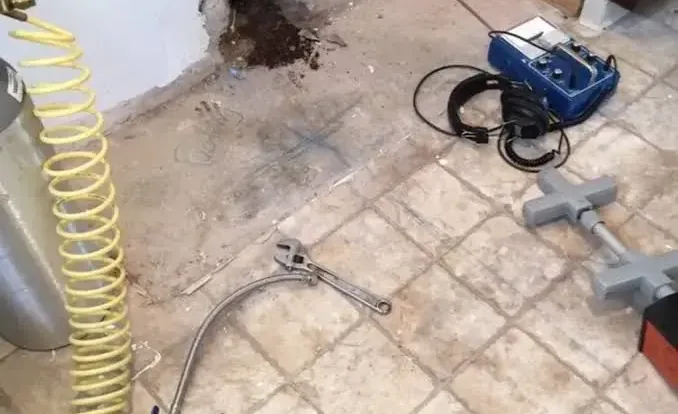
A slab leak starts where nobody can see it. In Sun Valley, many single story homes from the 1940s to the 1960s sit on concrete slabs with copper supply pipe running underneath, so the first sign is often a warm patch of floor, a hissing sound or a water bill that makes no sense.
Key takeaways
- Common signs of a slab leak are a warm spot on the floor, the sound of running water with every fixture off, a meter that keeps moving and damp baseboards.
- Shutting off the main water valve stops new water from reaching the leak while the floor is checked.
- A plumber finds and fixes the leaking pipe; the restoration crew extracts the water and dries the slab, flooring and wall bottoms.
- Water on a slab spreads sideways instead of draining down, so damage often shows up in rooms away from the leak.
- Photographs taken before anything is moved make the repair and any claim easier to document.
Why slab homes hide leaks so well
Much of Sun Valley was built after the war, and a lot of it is single story housing poured on concrete. The water supply pipe in those homes often runs through or under the slab instead of through an attic or crawl space.
When a pipe develops a pinhole or splits under the concrete, the water has nowhere to go but sideways and up. It follows the slab edge, soaks under the baseboards and wicks into the bottom of the drywall.
Hard LADWP water also shortens water heater life, and a failing tank in a garage or closet can be mistaken for a leak under the floor. A plumber can tell the two apart, which matters because the repairs are very different.
- Copper supply pipe under a slab can leak at a pinhole long before any stain appears.
- Carpet and pad hold water against the concrete and hide it from view.
- Laminate and wood flooring may cup or lift only after the slab has been wet for a while.
Signs a leak is running under the floor
What a homeowner can notice
The signs are easy to dismiss one at a time. Together they point to water under the floor.
A warm spot is a classic clue, because a hot water pipe heats the concrete above it.
One more clue is timing. A roof leak shows up after a storm, but a slab leak runs day and night in dry weather too, so the symptom does not come and go with the rain.
- A warm or damp patch on a tile, wood or carpeted floor
- The sound of water running when every tap and appliance is off
- A musty smell in a room that was fine last month
- Baseboards that swell, peel or stain along one wall
A simple meter test
With every fixture and appliance off, the household water meter should sit still. If the dial or low flow indicator keeps moving, water is going somewhere.
Closing the main valve and watching the meter again helps separate a leak in the house pipe from one in the yard.
The first steps while a leak is active
The goal in the first hours is to stop new water and protect what is dry. A slab leak water damage job starts with the plumbing, then moves to the floor.
A restoration crew does not need to wait for the final pipe repair to start pulling water out of carpet and pad, as long as the supply has been shut off.
A leak under concrete is not a do it yourself job. Chipping or drilling the floor without knowing where the pipe runs can cut a second pipe or an electrical conduit.
- Close the main water valve and keep the water off.
- Move furniture, rugs and boxes off the wet area, lifting legs onto foil or blocks.
- Photograph the damp spots, the meter and any stains before anything changes.
- Call a plumber for leak detection and a restoration crew for the wet floor.
- Leave the floor alone until a plumber has located the pipe.
How the crew finds the water and dries the slab
Mapping where the water went
A moisture meter and an infrared camera show which parts of the floor and walls are wet, including rooms that look normal. Readings are taken on the slab, on the flooring and a few inches up the walls.
That map decides what comes out and what stays.
Lifting flooring and extracting water
Wet carpet and pad are usually lifted and often discarded, and any standing water is pulled out with water extraction equipment.
Hard flooring may be removed in sections so the concrete underneath can breathe.
Drying concrete and wall bottoms
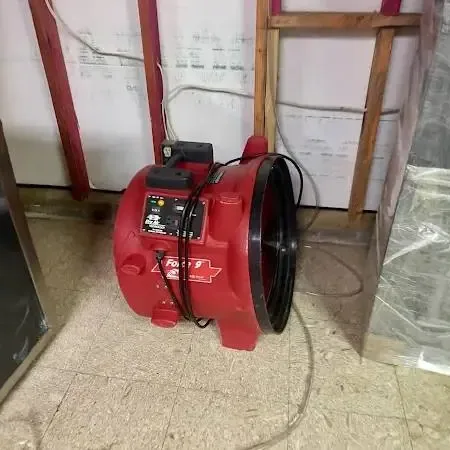
Concrete holds moisture longer than most people expect. Dehumidifiers and air movers run while the crew rechecks readings, and the lower strip of wet drywall may be cut out where water wicked upward.
The job is finished when the readings match dry areas of the same house, not when the room feels dry. This is the work behind structural drying.
Protecting what stays in the room
Furniture is lifted or moved, and wet belongings are sorted into what can be dried and what cannot. Items that wicked up water from the floor, such as sofa legs and cabinet bases, are checked too.
Photographs and daily readings are kept so the plumber, the owner and anyone handling a claim all see the same record.
How the house type changes the plan
Sun Valley has postwar slab houses, older raised floor homes, the river rock homes of Stonehurst and apartments. A leak behaves differently in each.
On a slab, the water spreads across the floor and up the walls. In a raised floor house, water can drop into the space below, so drying has to happen under the floor as well as above it.
- Slab homes: flooring lifted, concrete dried, wall bottoms checked.
- Raised floor homes: subfloor and joists checked from above and below.
- Apartments: neighboring units and shared walls checked for moisture.
What a good record of the loss includes
A slab leak can run for weeks before anyone notices, so the paperwork matters. A clear record shows what was wet, what was removed and what the readings said at each visit.
The record is also useful when a landlord, an owner or a claims adjuster needs to understand how far the water traveled.
- Dated photographs of the floor, the baseboards and the meter
- The moisture readings taken at the start and at each follow up
- A list of flooring, pad and drywall that was removed
- The plumber's note on where the pipe leaked and how it was fixed
Repair and cleanup are two separate jobs
The plumber decides how the pipe is fixed, whether by repairing the leak where it sits or rerouting the supply. That work happens on the plumber's schedule.
Once the pipe is sound, the flooring, baseboards and drywall that were removed can be replaced. Because older copper can leak in more than one spot, a similar burst and pinhole pipe leaks visit is worth discussing with the plumber.
Questions
How can a homeowner tell a slab leak from a leak inside a wall?
A warm floor spot, water noise with everything off and a moving meter all point to the floor. A stain high on a wall points to a different pipe, and a plumber can confirm which.
Does the slab always have to be broken open?
Not always. A plumber may reroute the supply instead of opening the concrete. The restoration work on flooring and walls is needed either way.
Can water damage show up away from the leak?
Yes. Water spreads across the slab and into wall bottoms, so a damp baseboard in one room can trace back to a pipe somewhere else.
How long does a slab take to dry?
There is no set number. Concrete dries slowly, and the crew keeps checking readings until the slab matches the dry parts of the house.
Should the flooring be saved?
Hard flooring can sometimes be dried and kept. Carpet pad that sat in water is usually replaced.
Is a suspected slab leak an emergency?
Treat it as urgent. Water that keeps running soaks flooring and wall bottoms and adds to the bill, so shutting off the main valve and calling a plumber and a restoration crew should not wait.