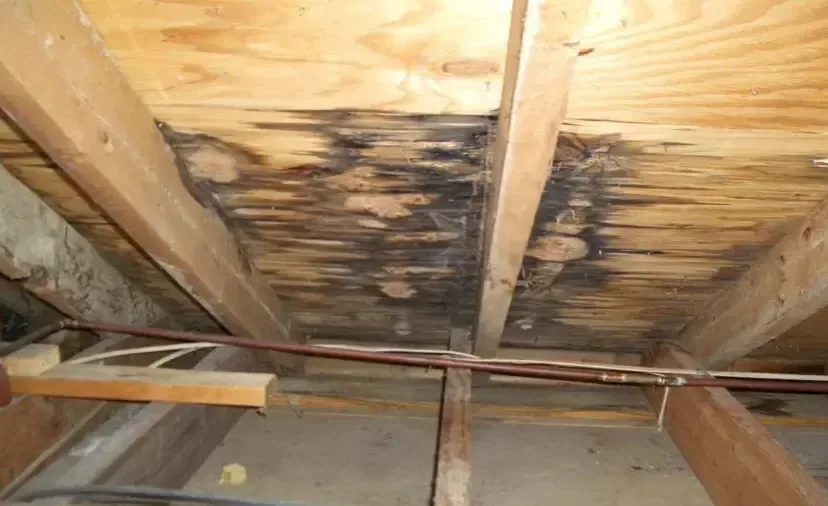
When rain finds a way through a roof, the homeowner ends up with two separate jobs: fixing the roof and drying the house. They need different people, different timing and, for the roof, a city permit.
Key takeaways
- The city Building Division says re-roofing in the same material, roof repair included, needs a permit but no plan check.
- The roof repair and the drying of the ceiling, attic and insulation are separate jobs that can run side by side.
- Wet insulation is usually removed, and ceiling drywall is opened when it has soaked through.
- A bulging ceiling can hold a lot of water, so stay out from under it and keep the room clear.
- Heavy storms, like the December 2025 rain the city prepared for, are when hidden roof leaks show up.
Two jobs after a roof leak
A leak that reaches a ceiling has already crossed the roof covering, the sheathing, the attic and the drywall. Each layer can be wet, and each one belongs to a different part of the repair.
The roofer deals with how the water got in. The restoration crew deals with where the water went.
Treating them as one job is the usual mistake. A repaired roof over a wet attic still leaves soaked insulation and drywall behind, and that is where the long term damage builds.
- Roof job: find the entry point, repair the roof and meet the permit requirement.
- Drying job: extract water, remove wet insulation and drywall, and dry the framing.
- Each job can start without waiting for the other, as long as the weather is held out.
What the city says about roof repairs
The South Pasadena Building Division's FAQ says re-roofing in the same material as the existing roof needs a permit but no plan check. It states that this includes roof repair.
That means a patch is not a casual weekend job. A homeowner should ask the roofer how the permit will be handled before work starts.
The drying of the attic and ceiling is a separate step, and the crew can document the moisture readings while the roof work is arranged.
Many homeowners ask whether the drying also needs a permit. The city FAQ addresses roof repair, so the roofer and the Building Division are the right people to ask about permit questions.
Where the water goes once it passes the roof
The attic and insulation
Water runs along rafters and drips onto insulation, which soaks it up and holds it against the ceiling below. Wet insulation loses its value and keeps the drywall damp.
Blown or batt insulation compresses when wet and does not spring back, which is why it is normally replaced rather than dried in place.
Ceiling drywall and fixtures
Drywall shows brown stains, bubbling paint or a sag. Recessed lights and ceiling fans can collect water in their housings, which is an electrical hazard.
A ceiling that looks only stained may be soaked behind the paint, so it is checked with a moisture meter before anything is covered.
Walls and floors below
Water that does not stop at the ceiling travels down wall cavities. It can reach baseboards, carpet and hardwood in the room underneath.
When storms find the weak spots
In December 2025 the city said heavy rain showers and winds were expected from Tuesday, December 23, through at least Saturday, December 27. Crews inspected and cleared storm drains and catch basins and monitored flood prone areas ahead of the storm.
Long dry stretches give roofs time to dry out and crack, so the first heavy rain after them is when a flashing, a vent or a worn section starts to leak. A small stain that appears after one storm usually grows in the next.
The same pattern shows up in older neighborhoods and newer ones alike. The roof does the quiet work all year, and the storm reveals which parts are tired.
- Check for stains on ceilings and upper walls after every heavy rain.
- Look in the attic with a flashlight for dark insulation or damp wood.
- Do not wait for a drip to start before calling someone.

First steps when a ceiling is dripping
Acting quickly limits the damage. The first goal is safety, and the second is catching as much water as possible.
- Move furniture and rugs away from the dripping spot and set out buckets.
- Turn off power to ceiling lights or fans that are wet.
- Stay out from under a bulging ceiling, because it can drop suddenly.
- Photograph the stain, the drip and the room before moving anything.
- Call a roofer for the cause and a restoration crew for the water.
How the ceiling and attic are dried
The crew starts with moisture readings on the ceiling, the walls and the framing. Wet insulation comes out, and drywall is cut open where it has soaked through or begun to sag.
A roof leak water damage visit usually pairs with ceiling leak water damage work, since the two share the same wet materials.
For a flat spot or a vent on the roof, the crew may only need to open a small section of drywall. For a large soaked area, the whole ceiling bay can come out so the joists dry fully.
- Fans and dehumidifiers move air through the opened ceiling.
- Readings are repeated until the framing matches dry areas.
- New insulation and drywall go in only after the framing is dry.
- Stain blocking paint over a damp ceiling hides the problem and does not fix it.
Older housing and shared buildings
About 37 percent of South Pasadena's 10,007 housing units were built in 1939 or earlier, and about 94 percent are over 30 years old. Houses that have stood that long have seen a lot of weather and repairs, so an attic check is worth the effort.
The city also has more renter occupied units than owner occupied ones, with SCAG counting 5,337 against 4,670. In a shared building, a roof leak can drip into more than one unit, so tenants should tell the owner or manager right away.
The city hub lists all local services.
Homeowners with questions about the same kind of leak in other neighborhoods can read the main roof leak water damage page for the full process.
Questions
Does a roof repair need a permit in South Pasadena?
The Building Division FAQ says re-roofing in the same material, including roof repair, needs a permit but no plan check. A roofer can confirm how it applies to a given repair.
Can the ceiling be dried before the roof is fixed?
Yes, as long as the roof is covered so more water is not coming in. The two jobs can run at the same time.
Does wet attic insulation always have to be removed?
Usually. Insulation that has soaked through loses its value and keeps the ceiling wet, so it is normally taken out and replaced.
Is a bulging ceiling dangerous?
It can be. A bulge can hold a lot of trapped water and may drop, so keep people and furniture clear until a crew has checked it.
Should a stain be painted over once it dries?
Not until the framing and drywall have been checked. Paint can hide moisture that is still there, and the stain often returns.
What should be photographed after a roof leak?
The stain, the drip, the attic and any wet insulation, with the date, before cleanup starts. Later photos should show each stage of the drying.