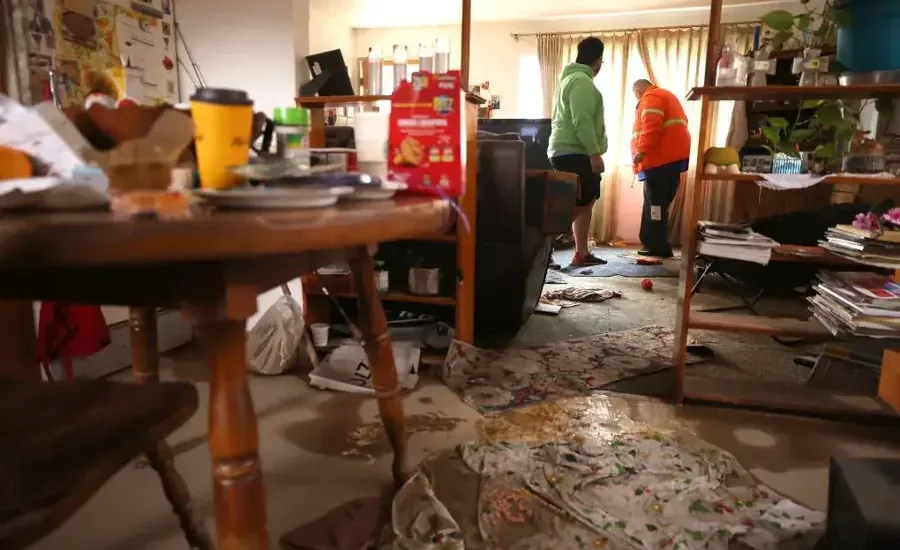
Before a major storm in November 2025, San Marino's fire department staffed a pump vehicle and moved sandbags into place for the public. That kind of prep shows what a household can do ahead of heavy rain, and what comes next if water still gets in.
Key takeaways
- In November 2025 the fire department staffed an extra vehicle with pumps, hose, tarps and hand tools for water emergencies.
- Sand and sandbags were moved to the Stoneman building for public use ahead of that storm.
- The National Weather Service issued flash flood warnings across Los Angeles County during those storms.
- Storm water inside a building is treated as contaminated and cleaned before it is dried.
- Who to call depends on the problem: the water utility, the city or a restoration crew.
How the city prepared in November 2025
Ahead of a major storm in November 2025, the San Marino Fire Department took several steps to be ready for water emergencies.
Fire personnel also helped the Parks and Public Works Department move sand and sandbags to the Stoneman building for the public to use.
The order is worth copying at home. Equipment and supplies were staged before the rain, not after the first call.
- An extra utility vehicle was staffed with pumps, hose, tarps and hand tools.
- All frontline fire apparatus was equipped with swift water rescue gear.
- The city's major washes were surveyed before the rain.
- The National Weather Service issued flash flood warnings across the county.
Drain work happening in the background
The city has installed trash capture devices in 39 city owned storm drain catch basins, with construction finished in late December 2024.
It is also designing a new storm drain culvert at Lacy Park to improve drainage during rain events. Construction is not expected before fiscal year 2026-27, and the project is still described as being in design.
None of this stops rain, and it is not a promise that any street or yard will stay dry. It shows that the city is working on how water moves through its drains, while each property still needs its own plan.
What a homeowner can do before the rain
Preparation is mostly small, practical steps. They matter most when a storm arrives after the ground is already wet.
Sandbags slow and divert water at a door but do not make a watertight seal. Rooms at ground level with doors to the yard are the places water usually reaches first, so keep those floors clear.
- Clear gutters and downspouts and point them away from the house.
- Keep sandbags or towels ready for door thresholds.
- Move valuables and papers off floors in ground level rooms.
- Learn where the main water valve and electrical panel are.
- Photograph the property so later damage is easy to compare.
- Check that sump pumps, if the house has one, are working and the power is on.
Who to call for which problem
Sorting the call correctly saves time, because each problem has a different owner. Cleanup crews work inside the property, not in the street or on a utility pipe.
Water emergencies and main breaks
California American Water provides water service in San Marino. The city sends water emergencies, main breaks and meter leaks to Cal-American Water.
Sewer stoppages
For a sewer stoppage the city asks residents to call the Public Works Manager on weekdays and the police department after hours.
Water inside the house
When storm water has already reached floors or walls, a restoration crew handles extraction and drying. The crew cannot fix a street or a utility, so the right call depends on the source.
A crew can also document the readings and photos for the homeowner, which helps when a claim file or a repair estimate is needed later.
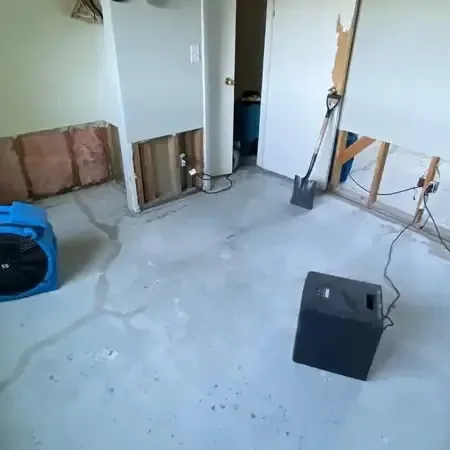
If storm water gets inside
Water that enters from outside carries soil and debris, so it is treated as contaminated even when it looks clear. That changes what can be saved.
The timing matters. Wet drywall and carpet that stay damp for 24 to 48 hours can start to grow mold, so the removal does not wait for the weather to clear.
Water that came in through a door at ground level often reaches closets, laundry rooms and garages first. Those spaces tend to hold stored boxes and appliances that are hard to move once the floor is wet.
- Standing water is pumped out first, which is the job of water extraction.
- Carpet, pad and wet insulation are usually removed.
- Floors and wall bases are cleaned and disinfected.
- Framing and concrete are dried with air movers and dehumidifiers until readings return to normal.
- Wall bases and cabinet bottoms are checked with a moisture meter before they are closed up.
Back to back storms and saturated ground
The San Marino Tribune reported that three storms in about a week left Southern California grounds saturated. When ground is saturated, the next rain has fewer places to go.
Wet ground, wet roofs and full gutters all work against a house at the same time. A leak that was dismissed after the first storm can turn into a ceiling stain after the second.
That is why a small problem after the first storm deserves a look before the next one arrives. A damp baseboard or a stained ceiling gets worse when more rain follows.
For wet floors or walls, the storm and flood cleanup service handles the removal and drying.
Gutters, downspouts and roof edges are worth checking again between storms, since debris from the first rain can block them before the second.
After the storm: checks and records
A walk through the house the next day catches problems early. Look at ceilings, wall bases and garage floors.
Keep dated photos and readings together, and note what was removed. Homeowners can find the other local water services on the San Marino hub.
If something looks wrong, a small storm cleanup call early costs less than a wall that has stayed wet for weeks.
Questions
Where did residents get sandbags before the November 2025 storm?
Fire personnel helped Parks and Public Works move sand and sandbags to the Stoneman building for public use. The city is the place to ask about current offers.
What is the Lacy Park culvert?
It is a storm drain culvert the city is designing to improve drainage during rain events. It is in design only, and construction is not expected before fiscal year 2026-27.
Is storm water inside a house clean water?
No. Water that comes in from outside is treated as contaminated, so porous materials are removed and surfaces are cleaned and disinfected.
Who handles a water main break?
The city sends water emergencies, main breaks and meter leaks to Cal-American Water, which provides water service in San Marino.
Can a restoration crew start before the rain stops?
Extraction can start once it is safe to enter and the water has stopped rising. Drying is repeated until the readings match dry areas.
Do sandbags keep water out completely?
No. Sandbags slow and redirect water at a door, but gaps remain. They help most when combined with clearing gutters and keeping valuables off the floor.