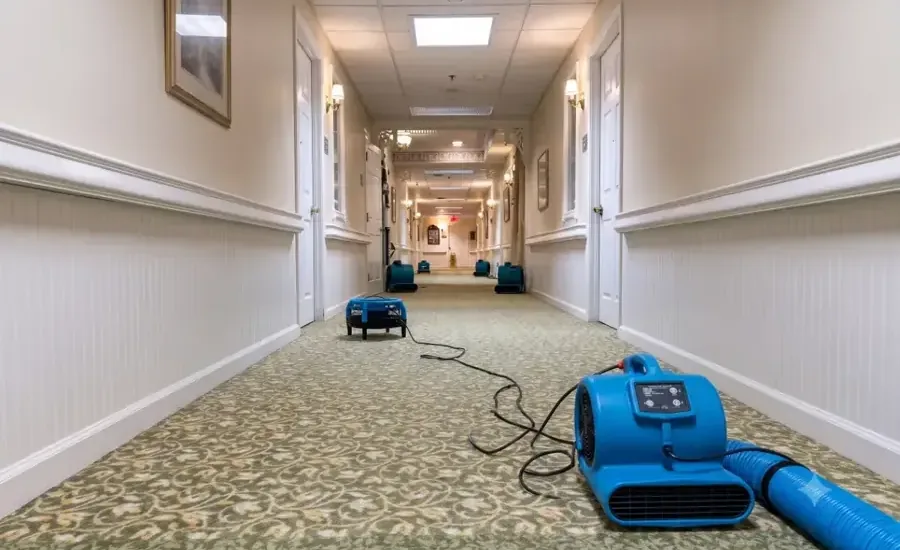
For a restaurant, a drain that backs up is more than a mess. It stops the kitchen, closes the dining room and puts food and equipment at risk. Alhambra's city code speaks to the main cause directly: fats, oils and grease.
Key takeaways
- The city code covers grease removal device maintenance.
- The code also says sewer pipes to and from those devices must be kept in good repair and clear of fat, oil and grease buildup that could contribute to backups.
- A backup in a kitchen is Category 3 water, so porous finishes are removed and surfaces are disinfected before drying.
- Mixed use buildings on and near Main Street share walls and floors, so a backup in one space can reach another.
- A written record of readings, photos and removed materials helps a business plan a staged reopening.
Why restaurant drains back up
Kitchens send a steady stream of grease, food scraps and soap down their drains. Cooling grease hardens inside pipes and collects on the rough walls of old pipe, shrinking the opening a little at a time.
The city runs a sanitary sewer system of its own, and about 99 percent of it is vitrified clay pipe. The Wastewater Division cleans city sewer pipes by high pressure jetting and runs seven lift stations.
- Grease buildup narrows a drain until the next clump closes it.
- Food solids and wipes can catch on a rough or damaged pipe.
- A stoppage in the shared pipe can push water up through the lowest floor drain.
What the city code says about grease
Alhambra's code covers the maintenance of grease removal devices. It says sewer pipes to and from those devices must be kept in good repair and clear of buildup of fats, oils and grease that could contribute to backups.
A business owner should read that language alongside the lease, since the person who maintains the device and the pipe may be the tenant or the property owner.
- Keep a written log of device cleaning dates.
- Ask the landlord who maintains the pipe between the device and the main.
- Train kitchen staff to scrape plates and pans before washing.
A kitchen backup on day one
The first hours decide how much of the kitchen is lost. The aim is to stop adding water and keep people and food away from the contaminated area.
Food, ice and paper goods that touched the water are thrown away, not salvaged. Sealed packaging that stayed dry above the waterline may be kept, but anything near the floor drain is suspect.
- Stop using sinks, dishwashers and floor drains in the affected area.
- Clear staff and customers from the wet space and block off the area.
- Move food, packaging and small equipment out of the water.
- Photograph the water, the drain and the damaged items.
- Call a plumber to clear the stoppage and a crew for the water.
How commercial cleanup is sequenced
Extract and contain
The contaminated water is pumped out and the work area is sealed with plastic sheeting so the dining room and storage stay clean. A crew in protective gear does the extraction.
This is the first stage of commercial water damage work, where the goal is to confine the loss.
Floor drains and floor sinks are flushed and checked after the plumber clears the stoppage, since they hold residue that can cause an odor later.
Remove porous finishes
Anything that soaked up sewage is removed, since drying alone cannot make it safe.
- Ceiling tiles and insulation below or near the affected area
- Baseboards, cove base and the lower strip of drywall
- Wood shelving and cardboard stock that touched the water
Disinfect and dry
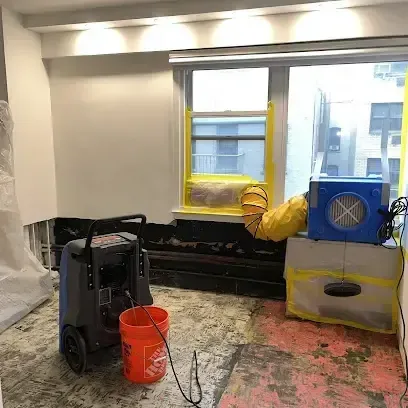
Floors, walls and drains are scrubbed and disinfected. Drying equipment then removes moisture from the slab, the walls and the cabinet bases.
Sewage backup cleanup finishes with readings, so the crew can show that the structure matches dry areas before rebuilding.
Stainless steel equipment, tile and sealed concrete can usually be cleaned and kept, which shortens the rebuild.
Downtown buildings with shared walls
The Main Street Business District has restaurants, retail, service and entertainment venues, and mixed use buildings combine homes and businesses. Condominiums and rental apartments are also common downtown.
In a building like that, a backup in a ground floor kitchen can reach a neighbor's storeroom or the apartment above it. Tenants and owners should tell the property manager early so each space is checked.
Floor sinks in kitchens are often the lowest drains in a building, so they are where a downstream stoppage shows up first. A backup that begins in one tenant space can leave several neighbors with the same problem.
- Shared walls and floors can carry water between spaces.
- A common drain can back up into the lowest unit first.
- Records for each space should be kept separately.
Keeping the pipes clear
No kitchen can remove every bit of grease, but good habits shorten the odds of a repeat backup.
The city jets its public sewer pipe with high pressure water. A business can ask a plumber for the same kind of cleaning and a camera inspection of its own pipes before a stoppage happens.
- Scrape and wipe pots, pans and plates into the trash first.
- Keep strainers in every sink and floor drain.
- Clean the grease removal device on a schedule and write it down.
- Never pour fryer oil or hot grease into a drain or a floor sink.
- Ask a plumber to jet or inspect the pipe if drains slow down.
Reopening in stages
A business does not always have to stay closed until the whole loss is repaired. A crew can finish the contaminated area first and release unaffected rooms, depending on what the readings show.
Owners can compare the plan with the Sun Valley commercial water damage page, which lays out the same process for businesses in other neighborhoods. The Alhambra hub lists every local service.
- Ask the crew which rooms are released first and what readings support that.
- Keep a dated list of everything removed, with photos.
- Have the plumber's report about the cause available for the owner and landlord.
Questions
What does Alhambra's code say about grease removal devices?
The city code covers grease removal device maintenance and says sewer pipes to and from those devices must be kept in good repair and clear of buildup that could contribute to backups.
Is a restaurant sewer backup Category 3 water?
Yes. Sewage is Category 3, so porous materials it touched are removed and surfaces are cleaned and disinfected before drying.
Who maintains the pipe between the grease device and the main?
That depends on the building and the lease. The code says the pipes to and from the device must be kept clear, so owners and tenants should confirm who is responsible.
Can part of a restaurant stay open during cleanup?
Sometimes. If containment holds and readings show that other areas are unaffected, a crew can stage the work so those areas are released first.
Can a neighbor in the same building be affected?
Yes. Mixed use buildings share walls, floors and sometimes drains, so a backup in one unit can reach another and each space should be checked.